James R. Hartwell writes practical nonfiction on business, strategy, and personal growth. His work turns complex ideas into clear, useful insights for modern readers.
Nouveauté
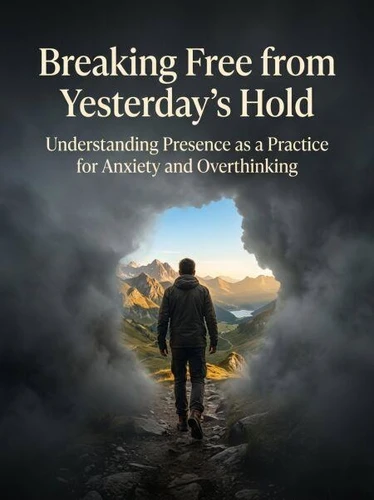
Breaking Free from Yesterday's Hold. Understanding Presence as a Practice for Anxiety and Overthinking
Par :Formats :
Disponible dans votre compte client Decitre ou Furet du Nord dès validation de votre commande. Le format ePub est :
- Compatible avec une lecture sur My Vivlio (smartphone, tablette, ordinateur)
- Compatible avec une lecture sur liseuses Vivlio
- Pour les liseuses autres que Vivlio, vous devez utiliser le logiciel Adobe Digital Edition. Non compatible avec la lecture sur les liseuses Kindle, Remarkable et Sony
 , qui est-ce ?
Notre partenaire de plateforme de lecture numérique où vous retrouverez l'ensemble de vos ebooks gratuitement
Pour en savoir plus sur nos ebooks, consultez notre aide en ligne ici
C'est si simple ! Lisez votre ebook avec l'app Vivlio sur votre tablette, mobile ou ordinateur :

- Nombre de pages285
- FormatePub
- ISBN978-3-565-63780-5
- EAN9783565637805
- Date de parution12/08/2026
- Protection num.pas de protection
- Taille823 Ko
- Infos supplémentairesepub
- ÉditeurEmphaloz Publishing House
Résumé
You know the feeling of being somewhere physically while your mind replays yesterday or rehearses tomorrow. This book explores the psychological weight of living outside the present moment and why anxiety thrives when attention scatters across time. It examines how overthinking creates distance from direct experience, how the mind constructs suffering through narrative loops, and what shifts when awareness returns to what is actually happening now.
You will find reflections on recognizing thought patterns, releasing the need to control outcomes, and building a steadier relationship with uncertainty. The book does not promise instant peace or permanent calm, but it offers a framework for noticing when you have left the present and how to return without force. What would change if you stopped treating this moment as a problem to solve?
You will find reflections on recognizing thought patterns, releasing the need to control outcomes, and building a steadier relationship with uncertainty. The book does not promise instant peace or permanent calm, but it offers a framework for noticing when you have left the present and how to return without force. What would change if you stopped treating this moment as a problem to solve?