Nouveauté
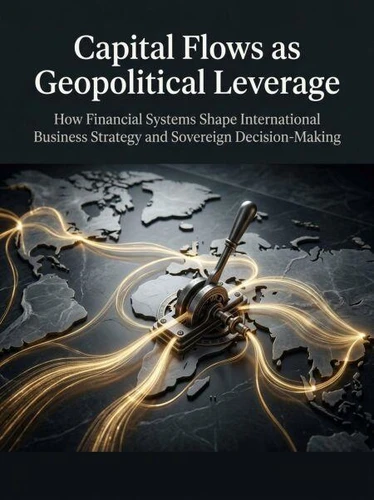
Capital Flows as Geopolitical Leverage. How Financial Systems Shape International Business Strategy and Sovereign Decision-Making
Par :Formats :
Disponible dans votre compte client Decitre ou Furet du Nord dès validation de votre commande. Le format ePub est :
- Compatible avec une lecture sur My Vivlio (smartphone, tablette, ordinateur)
- Compatible avec une lecture sur liseuses Vivlio
- Pour les liseuses autres que Vivlio, vous devez utiliser le logiciel Adobe Digital Edition. Non compatible avec la lecture sur les liseuses Kindle, Remarkable et Sony
 , qui est-ce ?
Notre partenaire de plateforme de lecture numérique où vous retrouverez l'ensemble de vos ebooks gratuitement
Pour en savoir plus sur nos ebooks, consultez notre aide en ligne ici
C'est si simple ! Lisez votre ebook avec l'app Vivlio sur votre tablette, mobile ou ordinateur :

- Nombre de pages565
- FormatePub
- ISBN978-3-565-60207-0
- EAN9783565602070
- Date de parution30/07/2026
- Protection num.pas de protection
- Taille1007 Ko
- Infos supplémentairesepub
- ÉditeurEmphaloz Publishing House
Résumé
Financial power no longer follows military dominance-it precedes it. The global monetary system has evolved into a geopolitical instrument that shapes trade policy, corporate strategy, and national sovereignty before a single diplomatic cable is sent.
This book examines three structural mechanisms: how capital controls function as non-military coercion, how currency swap agreements redefine alliance structures, and how payment system access determines which nations can participate in international commerce.
It maps the architecture of financial influence-from central bank coordination to sanctions enforcement-revealing how liquidity itself becomes a strategic asset. For executives operating across borders, understanding these dynamics is no longer optional. Supply chain resilience, market entry decisions, and risk modeling now require fluency in monetary geopolitics. The rules of international business are being rewritten not in trade agreements, but in the plumbing of the financial system itself.
It maps the architecture of financial influence-from central bank coordination to sanctions enforcement-revealing how liquidity itself becomes a strategic asset. For executives operating across borders, understanding these dynamics is no longer optional. Supply chain resilience, market entry decisions, and risk modeling now require fluency in monetary geopolitics. The rules of international business are being rewritten not in trade agreements, but in the plumbing of the financial system itself.