James R. Hartwell writes practical nonfiction on business, strategy, and personal growth. His work turns complex ideas into clear, useful insights for modern readers.
Nouveauté
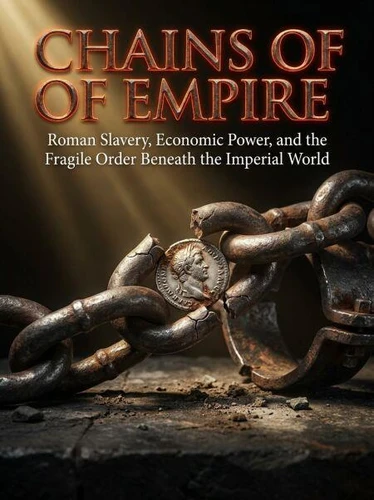
Chains of Empire. Roman Slavery, Economic Power, and the Fragile Order Beneath the Imperial World
Par :Formats :
Disponible dans votre compte client Decitre ou Furet du Nord dès validation de votre commande. Le format ePub est :
- Compatible avec une lecture sur My Vivlio (smartphone, tablette, ordinateur)
- Compatible avec une lecture sur liseuses Vivlio
- Pour les liseuses autres que Vivlio, vous devez utiliser le logiciel Adobe Digital Edition. Non compatible avec la lecture sur les liseuses Kindle, Remarkable et Sony
 , qui est-ce ?
Notre partenaire de plateforme de lecture numérique où vous retrouverez l'ensemble de vos ebooks gratuitement
Pour en savoir plus sur nos ebooks, consultez notre aide en ligne ici
C'est si simple ! Lisez votre ebook avec l'app Vivlio sur votre tablette, mobile ou ordinateur :

- Nombre de pages568
- FormatePub
- ISBN978-3-565-63447-7
- EAN9783565634477
- Date de parution11/08/2026
- Protection num.pas de protection
- Taille1 Mo
- Infos supplémentairesepub
- ÉditeurEmphaloz Publishing House
Résumé
Rome was not built on marble and rhetoric alone. Beneath its aqueducts, granaries, and military roads ran a current of forced labor so vast and so systematically organized that the empire's economic architecture would have collapsed without it. Slavery was not a peripheral feature of Roman civilization - it was its structural foundation.
The Roman economy's dependency on enslaved labor operated across three interlocking sectors.
The latifundia - vast agricultural estates across Sicily, North Africa, and Hispania - rested entirely on mass enslaved labor. In the mines of Hispania and Dacia, enslaved workers extracted the silver and copper that funded military campaigns and monetary circulation. On Rome's civic construction sites, enslaved laborers formed the invisible workforce behind the empire's most celebrated achievements.
These were not isolated dependencies - they constituted a single, interlocked system of coerced production. Roman law codified this dependency with precision. The Lex Aelia Sentia regulated manumission - governing age eligibility, legal procedures, and the conditional civic status that followed. A freed slave did not simply become a citizen: the transition was graduated and carefully calibrated to preserve hierarchy while incentivizing compliance.
The legal personality of the enslaved remained suspended between property and subject. Rome's social control was equally sophisticated.
The latifundia - vast agricultural estates across Sicily, North Africa, and Hispania - rested entirely on mass enslaved labor. In the mines of Hispania and Dacia, enslaved workers extracted the silver and copper that funded military campaigns and monetary circulation. On Rome's civic construction sites, enslaved laborers formed the invisible workforce behind the empire's most celebrated achievements.
These were not isolated dependencies - they constituted a single, interlocked system of coerced production. Roman law codified this dependency with precision. The Lex Aelia Sentia regulated manumission - governing age eligibility, legal procedures, and the conditional civic status that followed. A freed slave did not simply become a citizen: the transition was graduated and carefully calibrated to preserve hierarchy while incentivizing compliance.
The legal personality of the enslaved remained suspended between property and subject. Rome's social control was equally sophisticated.