James R. Hartwell writes practical nonfiction on business, strategy, and personal growth. His work turns complex ideas into clear, useful insights for modern readers.
Nouveauté
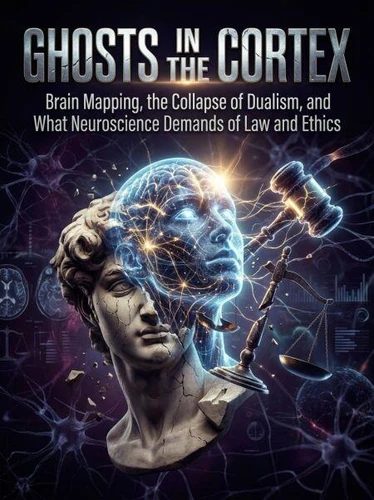
Ghosts in the Cortex. Brain Mapping, the Collapse of Dualism, and What Neuroscience Demands of Law and Ethics
Par :Formats :
Disponible dans votre compte client Decitre ou Furet du Nord dès validation de votre commande. Le format ePub est :
- Compatible avec une lecture sur My Vivlio (smartphone, tablette, ordinateur)
- Compatible avec une lecture sur liseuses Vivlio
- Pour les liseuses autres que Vivlio, vous devez utiliser le logiciel Adobe Digital Edition. Non compatible avec la lecture sur les liseuses Kindle, Remarkable et Sony
 , qui est-ce ?
Notre partenaire de plateforme de lecture numérique où vous retrouverez l'ensemble de vos ebooks gratuitement
Pour en savoir plus sur nos ebooks, consultez notre aide en ligne ici
C'est si simple ! Lisez votre ebook avec l'app Vivlio sur votre tablette, mobile ou ordinateur :

- Nombre de pages458
- FormatePub
- ISBN978-3-565-63469-9
- EAN9783565634699
- Date de parution11/08/2026
- Protection num.pas de protection
- Taille1 Mo
- Infos supplémentairesepub
- ÉditeurEmphaloz Publishing House
Résumé
For centuries, the boundary between mind and brain was maintained by philosophy, theology, and the quiet comfort of not knowing enough. That boundary has been dissolving for decades, but the pace of its erosion has accelerated sharply. Modern neuroimaging no longer merely observes the brain in action - it maps the precise neural networks through which a face becomes recognition, through which a moment becomes memory, through which a decision crystallizes into behavior.
What these maps reveal is deeply uncomfortable: that what we experience as the inner life - perception, intention, selfhood - is not a force acting upon the brain. It is what the brain does. The first pillar of this inquiry is empirical. Functional MRI and diffusion tensor imaging have, over the past two decades, produced a reconstruction of visual and mnemonic processing so detailed that researchers can now partially reconstruct what a subject saw from neural activity alone.
The default mode network, the hippocampal formation, the prefrontal binding architecture - these are no longer theoretical constructs. They are observable, measurable, and increasingly predictable systems. What they collectively undermine is the classical model of a conscious observer standing apart from neural mechanism. The observer, it turns out, is the mechanism. The second pillar is philosophical.
What these maps reveal is deeply uncomfortable: that what we experience as the inner life - perception, intention, selfhood - is not a force acting upon the brain. It is what the brain does. The first pillar of this inquiry is empirical. Functional MRI and diffusion tensor imaging have, over the past two decades, produced a reconstruction of visual and mnemonic processing so detailed that researchers can now partially reconstruct what a subject saw from neural activity alone.
The default mode network, the hippocampal formation, the prefrontal binding architecture - these are no longer theoretical constructs. They are observable, measurable, and increasingly predictable systems. What they collectively undermine is the classical model of a conscious observer standing apart from neural mechanism. The observer, it turns out, is the mechanism. The second pillar is philosophical.