SOLDES
Jusqu'à -70% sur une sélection d'articles*

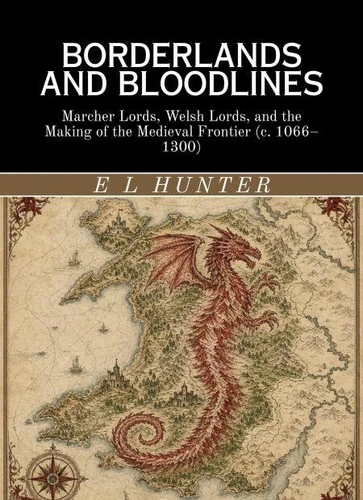
Borderlands and Bloodlines: Marcher Lords, Welsh Lords, and the Making of the Medieval Frontier (c. 1066–1300)
Par :Formats :
Disponible dans votre compte client Decitre ou Furet du Nord dès validation de votre commande. Le format ePub est :
- Compatible avec une lecture sur My Vivlio (smartphone, tablette, ordinateur)
- Compatible avec une lecture sur liseuses Vivlio
- Pour les liseuses autres que Vivlio, vous devez utiliser le logiciel Adobe Digital Edition. Non compatible avec la lecture sur les liseuses Kindle, Remarkable et Sony
 , qui est-ce ?
Notre partenaire de plateforme de lecture numérique où vous retrouverez l'ensemble de vos ebooks gratuitement
Pour en savoir plus sur nos ebooks, consultez notre aide en ligne ici
C'est si simple ! Lisez votre ebook avec l'app Vivlio sur votre tablette, mobile ou ordinateur :

- FormatePub
- ISBN8235180864
- EAN9798235180864
- Date de parution26/04/2026
- Protection num.pas de protection
- Infos supplémentairesepub
- ÉditeurIoakim Ioakim
Résumé
In 1210, King John had Maud de St Valéry and her eldest son walled up in a royal castle and left to starve. Offered the chance to buy her family's peace by surrendering her son as a hostage, she had refused, sending word that she would not entrust her child to a king who had murdered his own nephew. Her husband William de Braose - once the most powerful Marcher lord in Wales - died in exile in France.
Within a generation, the Braose lordships from the Severn to the sea were broken up among rivals. For two centuries after the Normans broke into Wales in the 1070s, a narrow band of country along the English border was one of the strangest political societies in medieval Europe. It was not England, and it was not quite Wales. It was the March - a patchwork of lordships, Welsh cantrefs, and contested boroughs where Marcher barons ruled as near-kings within their own liberties, holding their own courts and raising their own armies without answering to the crown.
The houses of Braose, Mortimer, Marshal and Clare built their fortunes on conquest, marriage, and private war. Against them stood the descendants of Rhodri Mawr and the Lord Rhys, whose lineages reached back to the ninth century and whose courts sustained a tradition of law and poetry that outlasted the princes themselves. Welsh princesses married Norman barons; frontier law was neither wholly English nor wholly Welsh; between the violence ran a dense web of kinship and obligation that neither crown could fully master. Borderlands and Bloodlines tells the story of these two centuries, from William FitzOsbern's first castles on the Wye to the death of Llywelyn ap Gruffudd at Cilmeri in 1282 and its long aftermath.
Drawing on royal records, Welsh chronicles, and the work of Gerald of Wales, it follows named families through the archives - the rise and fall of the de Braoses, the slow ascent of the Mortimers, the Dinefwr descent from Rhodri Mawr to the last princes of Deheubarth - and asks what it meant to live and rule on a frontier where no single law, language, or loyalty could stand alone.
Within a generation, the Braose lordships from the Severn to the sea were broken up among rivals. For two centuries after the Normans broke into Wales in the 1070s, a narrow band of country along the English border was one of the strangest political societies in medieval Europe. It was not England, and it was not quite Wales. It was the March - a patchwork of lordships, Welsh cantrefs, and contested boroughs where Marcher barons ruled as near-kings within their own liberties, holding their own courts and raising their own armies without answering to the crown.
The houses of Braose, Mortimer, Marshal and Clare built their fortunes on conquest, marriage, and private war. Against them stood the descendants of Rhodri Mawr and the Lord Rhys, whose lineages reached back to the ninth century and whose courts sustained a tradition of law and poetry that outlasted the princes themselves. Welsh princesses married Norman barons; frontier law was neither wholly English nor wholly Welsh; between the violence ran a dense web of kinship and obligation that neither crown could fully master. Borderlands and Bloodlines tells the story of these two centuries, from William FitzOsbern's first castles on the Wye to the death of Llywelyn ap Gruffudd at Cilmeri in 1282 and its long aftermath.
Drawing on royal records, Welsh chronicles, and the work of Gerald of Wales, it follows named families through the archives - the rise and fall of the de Braoses, the slow ascent of the Mortimers, the Dinefwr descent from Rhodri Mawr to the last princes of Deheubarth - and asks what it meant to live and rule on a frontier where no single law, language, or loyalty could stand alone.
A propos de E L Hunter
7,49 €
6,99 €
8,99 €
5,99 €
8,99 €
6,99 €
8,99 €
4,49 €
8,99 €