Nouveauté
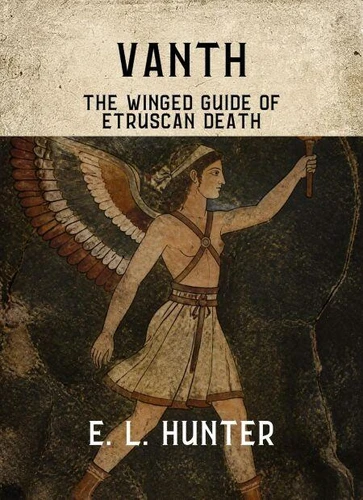
Vanth: The Winged Guide of Etruscan Death
Par :Formats :
Disponible dans votre compte client Decitre ou Furet du Nord dès validation de votre commande. Le format ePub est :
- Compatible avec une lecture sur My Vivlio (smartphone, tablette, ordinateur)
- Compatible avec une lecture sur liseuses Vivlio
- Pour les liseuses autres que Vivlio, vous devez utiliser le logiciel Adobe Digital Edition. Non compatible avec la lecture sur les liseuses Kindle, Remarkable et Sony
 , qui est-ce ?
Notre partenaire de plateforme de lecture numérique où vous retrouverez l'ensemble de vos ebooks gratuitement
Pour en savoir plus sur nos ebooks, consultez notre aide en ligne ici
C'est si simple ! Lisez votre ebook avec l'app Vivlio sur votre tablette, mobile ou ordinateur :

- FormatePub
- ISBN8235843981
- EAN9798235843981
- Date de parution10/06/2026
- Protection num.pas de protection
- Infos supplémentairesepub
- ÉditeurIoakim Ioakim
Résumé
She waits at the threshold with a torch and a pair of great dark wings - and almost no one remembers her name. Across the painted tombs and carved urns of ancient Etruria, one figure appears again and again at the moment of death: a winged woman named Vanth. She does not judge. She does not punish. She meets the dying, and she stays with them, and she sees them safely on their way. The Etruscans left no literature of their own, so Vanth survives only in images.
Reading that evidence carefully - frescoes and sarcophagi, the iconography of death, the haunting walls of the François Tomb - this book reconstructs her piece by piece: her shifting forms across centuries and cities, her partnership with the demon Charun, her distance from the Greek Furies, and her place in a society where women and death were unusually entwined. The result is a portrait of one of mythology's most intriguing figures, and a study of why the Etruscans - a people obsessed with the afterlife - chose to imagine its guardian as neither goddess nor demon, but as a companion.
A quietly moving account of how an entire civilization decided that death was a journey one need not make alone.
Reading that evidence carefully - frescoes and sarcophagi, the iconography of death, the haunting walls of the François Tomb - this book reconstructs her piece by piece: her shifting forms across centuries and cities, her partnership with the demon Charun, her distance from the Greek Furies, and her place in a society where women and death were unusually entwined. The result is a portrait of one of mythology's most intriguing figures, and a study of why the Etruscans - a people obsessed with the afterlife - chose to imagine its guardian as neither goddess nor demon, but as a companion.
A quietly moving account of how an entire civilization decided that death was a journey one need not make alone.
A propos de E L Hunter


8,99 €




7,49 €


8,99 €
5,99 €
8,99 €
6,99 €