
Nouveauté
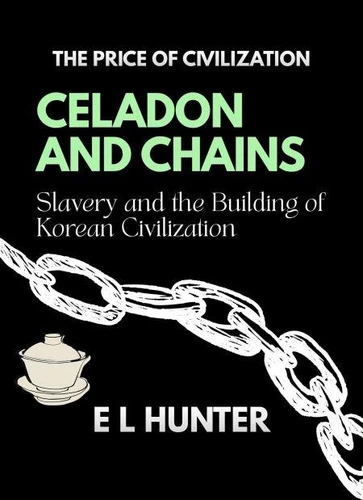
Celadon and Chains: Slavery and the Building of Korean Civilization. The Price of Civilization, #4
Par :Formats :
Disponible dans votre compte client Decitre ou Furet du Nord dès validation de votre commande. Le format ePub protégé est :
- Compatible avec une lecture sur My Vivlio (smartphone, tablette, ordinateur)
- Compatible avec une lecture sur liseuses Vivlio
- Pour les liseuses autres que Vivlio, vous devez utiliser le logiciel Adobe Digital Edition. Non compatible avec la lecture sur les liseuses Kindle, Remarkable et Sony
- Non compatible avec un achat hors France métropolitaine
 , qui est-ce ?
Notre partenaire de plateforme de lecture numérique où vous retrouverez l'ensemble de vos ebooks gratuitement
Pour en savoir plus sur nos ebooks, consultez notre aide en ligne ici
C'est si simple ! Lisez votre ebook avec l'app Vivlio sur votre tablette, mobile ou ordinateur :

- FormatePub
- ISBN8233876936
- EAN9798233876936
- Date de parution01/07/2026
- Protection num.Adobe DRM
- Infos supplémentairesepub
- ÉditeurLinda Balsamo
Résumé
The civilisation that made the most coveted ceramic of the medieval world, the celadon its Chinese rivals ranked first under heaven, fired it in a kingdom that owned a third of its people. For close to a thousand years it ranked people by birth and bound the lowest to the foulest work, and the art and learning the world still admires could not have stood a day without them. Celadon and Chains tells Korea's story with the unfree at its centre: the potters whose celadon a museum keeps though their names are lost; the slaves who raised the palaces of a new capital; the servants who freed the scholar for his books.
Here is the child sold in a famine year for grain to keep her family alive, and the tens of thousands of state slaves whose registers were burned in a palace courtyard in 1801, freed in an afternoon by the dynasty their labour had built. It traces, too, the longer shadow: a hierarchy the dynasty called as natural as heaven over earth, and a bondage so completely dissolved that its descendants now claim the blood of the masters.
Korean slavery differed, crucially, from that of Greece, Rome, and the Atlantic: its people shared the language, faith, and face of their owners, marked by nothing but birth, enslaved by their own kind and not a foreign one. This is what it means to inherit the celadon, the printing, and the alphabet from a civilisation that built them on the people it owned and then forgot. Clear-eyed popular history that never looks away.
The fourth book in the Price of Civilization series.
Here is the child sold in a famine year for grain to keep her family alive, and the tens of thousands of state slaves whose registers were burned in a palace courtyard in 1801, freed in an afternoon by the dynasty their labour had built. It traces, too, the longer shadow: a hierarchy the dynasty called as natural as heaven over earth, and a bondage so completely dissolved that its descendants now claim the blood of the masters.
Korean slavery differed, crucially, from that of Greece, Rome, and the Atlantic: its people shared the language, faith, and face of their owners, marked by nothing but birth, enslaved by their own kind and not a foreign one. This is what it means to inherit the celadon, the printing, and the alphabet from a civilisation that built them on the people it owned and then forgot. Clear-eyed popular history that never looks away.
The fourth book in the Price of Civilization series.
A propos de E L Hunter


8,99 €
7,49 €
6,99 €

8,99 €
5,99 €
8,99 €