
Nouveauté
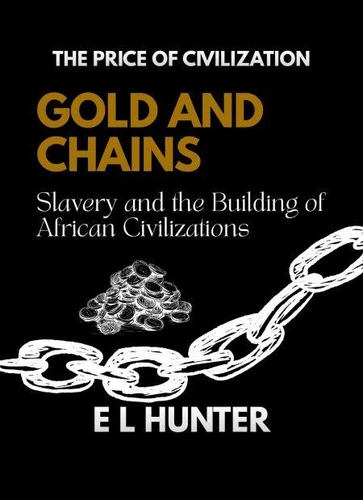
Gold and Chains: Slavery and the Building of African Civilizations. The Price of Civilization, #5
Par :Formats :
Disponible dans votre compte client Decitre ou Furet du Nord dès validation de votre commande. Le format ePub protégé est :
- Compatible avec une lecture sur My Vivlio (smartphone, tablette, ordinateur)
- Compatible avec une lecture sur liseuses Vivlio
- Pour les liseuses autres que Vivlio, vous devez utiliser le logiciel Adobe Digital Edition. Non compatible avec la lecture sur les liseuses Kindle, Remarkable et Sony
- Non compatible avec un achat hors France métropolitaine
 , qui est-ce ?
Notre partenaire de plateforme de lecture numérique où vous retrouverez l'ensemble de vos ebooks gratuitement
Pour en savoir plus sur nos ebooks, consultez notre aide en ligne ici
C'est si simple ! Lisez votre ebook avec l'app Vivlio sur votre tablette, mobile ou ordinateur :

- FormatePub
- ISBN8235803756
- EAN9798235803756
- Date de parution01/07/2026
- Protection num.Adobe DRM
- Infos supplémentairesepub
- ÉditeurIoakim Ioakim
Résumé
The greatest empire medieval Africa produced sent its king to Mecca in 1324 with sixty thousand attendants, five hundred enslaved men walking before him each carrying a staff of gold. The world still talks about Mansa Musa's pilgrimage. It does not often talk about who carried the gold. Gold and Chains tells the story of Africa's great civilisations - Ghana, Mali, Songhai, Benin, the Swahili cities, the forest kingdoms - with the unfree at their centre: the salt-cutters of Taghaza who hewed slabs from the desert floor and never left it; the women of Dahomey's palace whose bondage was domestic and absolute; the child pledged against a debt in a famine year and never redeemed.
The mosques of Djenné, the palaces of Great Zimbabwe, the trading fleets of the Swahili coast - none of it stood a day without them. It traces, too, the longer shadow. African slavery differed, crucially, from the Atlantic: its people were not sorted by race, not stripped of language and faith, and the line between bondage and belonging could shift across generations. But the structures were real and the suffering was real, and the Atlantic trade the world rightly condemns did not arrive into a vacuum - it arrived into a continent that already knew how to price a person.
This is what it means to inherit the gold, the mosques, and the oral epics from civilisations that built them on people they owned and then forgot. Clear-eyed popular history that never looks away. The fifth book in the Price of Civilization series.
The mosques of Djenné, the palaces of Great Zimbabwe, the trading fleets of the Swahili coast - none of it stood a day without them. It traces, too, the longer shadow. African slavery differed, crucially, from the Atlantic: its people were not sorted by race, not stripped of language and faith, and the line between bondage and belonging could shift across generations. But the structures were real and the suffering was real, and the Atlantic trade the world rightly condemns did not arrive into a vacuum - it arrived into a continent that already knew how to price a person.
This is what it means to inherit the gold, the mosques, and the oral epics from civilisations that built them on people they owned and then forgot. Clear-eyed popular history that never looks away. The fifth book in the Price of Civilization series.
A propos de E L Hunter




8,99 €

7,49 €
6,99 €

8,99 €
5,99 €