SOLDES
Jusqu'à -70% sur une sélection d'articles*

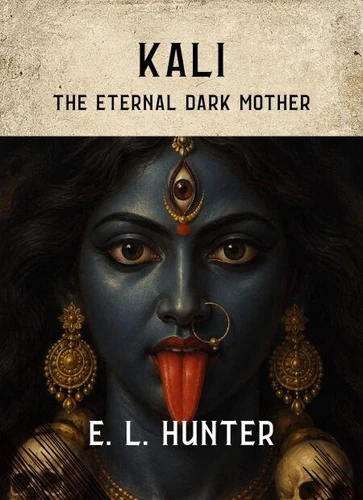
Kali: The Eternal Dark Mother
Par :Formats :
Disponible dans votre compte client Decitre ou Furet du Nord dès validation de votre commande. Le format ePub est :
- Compatible avec une lecture sur My Vivlio (smartphone, tablette, ordinateur)
- Compatible avec une lecture sur liseuses Vivlio
- Pour les liseuses autres que Vivlio, vous devez utiliser le logiciel Adobe Digital Edition. Non compatible avec la lecture sur les liseuses Kindle, Remarkable et Sony
 , qui est-ce ?
Notre partenaire de plateforme de lecture numérique où vous retrouverez l'ensemble de vos ebooks gratuitement
Pour en savoir plus sur nos ebooks, consultez notre aide en ligne ici
C'est si simple ! Lisez votre ebook avec l'app Vivlio sur votre tablette, mobile ou ordinateur :

- FormatePub
- ISBN8235953246
- EAN9798235953246
- Date de parution30/04/2026
- Protection num.pas de protection
- Infos supplémentairesepub
- ÉditeurIoakim Ioakim
Résumé
She wears a garland of severed heads and is addressed as Mother. The Hindu goddess Kali has held this paradox at the centre of her tradition for more than fifteen hundred years, and the resolution has occupied poets, philosophers, ritualists, and ordinary practitioners across Bengal, the wider Indian subcontinent, and now the global diaspora. For outside observers, the iconography has often registered as evidence of primitive violence - the severed heads, the lolling tongue, the cremation-ground siting read at face value.
Within the tradition, the same iconography is read as the most precise instructional material the goddess offers on what the work of liberation actually requires. The gap between the two readings is the problem this book takes up. Kali: The Eternal Dark Mother traces the figure across her major textual sources, regional articulations, and historical contexts: her emergence in the Devi Mahatmya, her elaboration in Tantric and Shakta literature, the Bengali devotional flowering through Ramprasad Sen and the poet-saints, the Dakshineswar tradition of Ramakrishna, the colonial-era Western encounter and its distortions, the goddess's role in Indian nationalist thought, and her contemporary circulation through diaspora communities and cross-cultural appropriation.
Within the tradition, the same iconography is read as the most precise instructional material the goddess offers on what the work of liberation actually requires. The gap between the two readings is the problem this book takes up. Kali: The Eternal Dark Mother traces the figure across her major textual sources, regional articulations, and historical contexts: her emergence in the Devi Mahatmya, her elaboration in Tantric and Shakta literature, the Bengali devotional flowering through Ramprasad Sen and the poet-saints, the Dakshineswar tradition of Ramakrishna, the colonial-era Western encounter and its distortions, the goddess's role in Indian nationalist thought, and her contemporary circulation through diaspora communities and cross-cultural appropriation.
A propos de E L Hunter

8,99 €

7,49 €
6,99 €

8,99 €
5,99 €
8,99 €