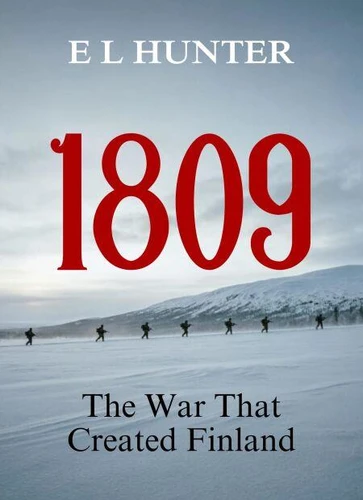
In February 1808 a Russian army crossed into Finland without a declaration of war. Eighteen months later the eastern half of the Swedish kingdom had become an autonomous grand duchy under Tsar Alexander I. The Finnish War of 1808-1809 was a peripheral campaign of the Napoleonic era, fought across forest and frozen sea. Its political consequences ran further than its military scale. By the Treaty of Fredrikshamn in September 1809, Sweden had lost a third of its territory and the Vasa dynasty had been overthrown by its own officers in a palace coup.
Russia gained a new western frontier - but on terms that, by a deliberate choice of Alexander I, left existing Finnish institutions intact. A peripheral war with central consequences The campaign produced moments that have stayed in Finnish memory - the fall of Sveaborg in May 1808, the field of Oravais in September, the Russian army's march across the frozen Bothnian Gulf the following March. It also produced one that shaped Finnish politics for the next century.
In late March 1809 the four estates of the Finnish provinces met Alexander I in person in the cathedral at Borgå, swore allegiance, and received from him a written assurance that Finnish religion, fundamental laws, and privileges would continue under his sovereignty. An institutional argument 1809 traces the conflict from its origins in the secret clauses of the Treaty of Tilsit to the undertaking given at Borgå and the institutions built on it: the Government Council established in August 1809 and renamed the Senate of Finland in 1816, the Bank of Finland founded in 1811, the move of the capital from Åbo to Helsingfors in 1812, and the eventual summoning of a regular Diet in 1863.
Its argument is that the political settlement of 1809 worked not because it announced a nation but because it left, in Finnish hands, a working set of institutions through which one could later be made. A hundred and eight years after Borgå, in December 1917, that institutional framework was what the new Finnish republic inherited.
In February 1808 a Russian army crossed into Finland without a declaration of war. Eighteen months later the eastern half of the Swedish kingdom had become an autonomous grand duchy under Tsar Alexander I. The Finnish War of 1808-1809 was a peripheral campaign of the Napoleonic era, fought across forest and frozen sea. Its political consequences ran further than its military scale. By the Treaty of Fredrikshamn in September 1809, Sweden had lost a third of its territory and the Vasa dynasty had been overthrown by its own officers in a palace coup.
Russia gained a new western frontier - but on terms that, by a deliberate choice of Alexander I, left existing Finnish institutions intact. A peripheral war with central consequences The campaign produced moments that have stayed in Finnish memory - the fall of Sveaborg in May 1808, the field of Oravais in September, the Russian army's march across the frozen Bothnian Gulf the following March. It also produced one that shaped Finnish politics for the next century.
In late March 1809 the four estates of the Finnish provinces met Alexander I in person in the cathedral at Borgå, swore allegiance, and received from him a written assurance that Finnish religion, fundamental laws, and privileges would continue under his sovereignty. An institutional argument 1809 traces the conflict from its origins in the secret clauses of the Treaty of Tilsit to the undertaking given at Borgå and the institutions built on it: the Government Council established in August 1809 and renamed the Senate of Finland in 1816, the Bank of Finland founded in 1811, the move of the capital from Åbo to Helsingfors in 1812, and the eventual summoning of a regular Diet in 1863.
Its argument is that the political settlement of 1809 worked not because it announced a nation but because it left, in Finnish hands, a working set of institutions through which one could later be made. A hundred and eight years after Borgå, in December 1917, that institutional framework was what the new Finnish republic inherited.


 , qui est-ce ?