SOLDES
Jusqu'à -70% sur une sélection d'articles*

Nouveauté
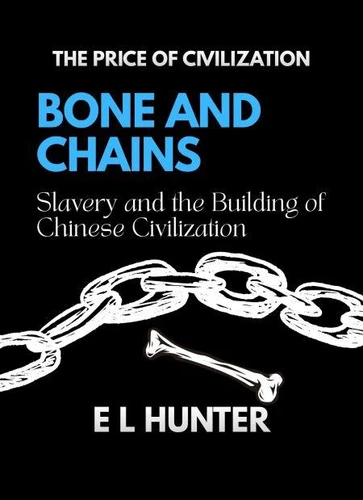
Bone and Chains: Slavery and the Building of Chinese Civilization. The Price of Civilization, #2
Par :Formats :
Disponible dans votre compte client Decitre ou Furet du Nord dès validation de votre commande. Le format ePub est :
- Compatible avec une lecture sur My Vivlio (smartphone, tablette, ordinateur)
- Compatible avec une lecture sur liseuses Vivlio
- Pour les liseuses autres que Vivlio, vous devez utiliser le logiciel Adobe Digital Edition. Non compatible avec la lecture sur les liseuses Kindle, Remarkable et Sony
 , qui est-ce ?
Notre partenaire de plateforme de lecture numérique où vous retrouverez l'ensemble de vos ebooks gratuitement
Pour en savoir plus sur nos ebooks, consultez notre aide en ligne ici
C'est si simple ! Lisez votre ebook avec l'app Vivlio sur votre tablette, mobile ou ordinateur :

- FormatePub
- ISBN8235702585
- EAN9798235702585
- Date de parution12/06/2026
- Protection num.pas de protection
- Infos supplémentairesepub
- ÉditeurIoakim Ioakim
Résumé
The civilisation that gave the world its first detailed census, its first examination system, and two thousand years of unbroken administrative record was built and sustained by people the records counted only as labour to be spent. At the height of the Han, close to sixty million subjects were registered - for taxation, for conscription, and for the month of unpaid labour every able-bodied man owed the state as a simple civic duty.
That was only the most ordinary form of compulsion. Bone and Chains tells China's story with the unfree at its centre. It follows them into the rammed-earth walls of the Qin frontier, the state foundries where the empire's iron was cast, the construction gangs at the First Emperor's tomb, and the shallow graves outside the capital where convict labourers were buried still wearing their fetters. Here are the Qiang captives whose killing was recorded on oracle bone as a matter of administrative routine; the conscripts halted by rain on the road north in 209 BCE, who knew the law would execute them for arriving late and rose in revolt instead, bringing down a dynasty; and the unnamed men in the convict cemetery at the Han capital, each buried with a brick recording his name, his home district, and the date he died - bookkeeping more than memorial. It also traces the longer shadow: how Mencius's claim that those who labour with their minds govern and those who labour with their strength are governed became the moral scaffolding of two thousand years of compulsion, and how Chinese bondage - state-commanded labour extracted as a duty of belonging, not a mark of race - differed crucially from the Atlantic slavery that came after, leaving a system that could dissolve without abolition and almost without memory.
This is the story of what it means to inherit the Great Wall, the Grand Canal, and the long written tradition from a civilisation that never seriously asked whether making its people dig was wrong. Clear-eyed popular history that never looks away. The second book in the Price of Civilization series.
That was only the most ordinary form of compulsion. Bone and Chains tells China's story with the unfree at its centre. It follows them into the rammed-earth walls of the Qin frontier, the state foundries where the empire's iron was cast, the construction gangs at the First Emperor's tomb, and the shallow graves outside the capital where convict labourers were buried still wearing their fetters. Here are the Qiang captives whose killing was recorded on oracle bone as a matter of administrative routine; the conscripts halted by rain on the road north in 209 BCE, who knew the law would execute them for arriving late and rose in revolt instead, bringing down a dynasty; and the unnamed men in the convict cemetery at the Han capital, each buried with a brick recording his name, his home district, and the date he died - bookkeeping more than memorial. It also traces the longer shadow: how Mencius's claim that those who labour with their minds govern and those who labour with their strength are governed became the moral scaffolding of two thousand years of compulsion, and how Chinese bondage - state-commanded labour extracted as a duty of belonging, not a mark of race - differed crucially from the Atlantic slavery that came after, leaving a system that could dissolve without abolition and almost without memory.
This is the story of what it means to inherit the Great Wall, the Grand Canal, and the long written tradition from a civilisation that never seriously asked whether making its people dig was wrong. Clear-eyed popular history that never looks away. The second book in the Price of Civilization series.
A propos de E L Hunter
7,49 €
6,99 €


8,99 €
5,99 €
8,99 €
6,99 €


8,99 €
4,49 €

8,99 €
8,99 €

8,99 €
8,99 €