
Nouveauté
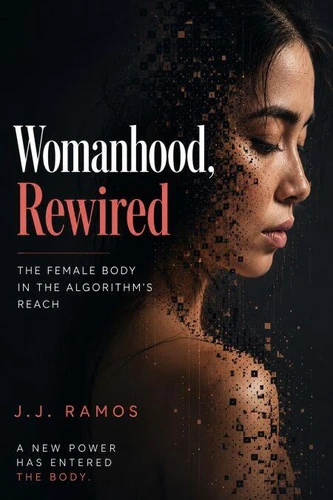
Womanhood, Rewired : The Female Body in the Algorithm's Reach
Par :Formats :
Disponible dans votre compte client Decitre ou Furet du Nord dès validation de votre commande. Le format ePub est :
- Compatible avec une lecture sur My Vivlio (smartphone, tablette, ordinateur)
- Compatible avec une lecture sur liseuses Vivlio
- Pour les liseuses autres que Vivlio, vous devez utiliser le logiciel Adobe Digital Edition. Non compatible avec la lecture sur les liseuses Kindle, Remarkable et Sony
 , qui est-ce ?
Notre partenaire de plateforme de lecture numérique où vous retrouverez l'ensemble de vos ebooks gratuitement
Pour en savoir plus sur nos ebooks, consultez notre aide en ligne ici
C'est si simple ! Lisez votre ebook avec l'app Vivlio sur votre tablette, mobile ou ordinateur :

- FormatePub
- ISBN8235393479
- EAN9798235393479
- Date de parution03/06/2026
- Protection num.pas de protection
- Infos supplémentairesepub
- ÉditeurIoakim Ioakim
Résumé
The previous waves of feminism fought for the right to vote, the right to work, the right to bodily autonomy, the right to be heard. None of them had to fight for the right to your own face. None of them had to figure out what consent means when the image is not technically you but is technically your face. In Womanhood, Rewired, J. J. Ramos follows the algorithmic patriarchy into the body itself.
Across thirteen chapters, the book maps every surface where AI has now reached: the period tracker that knows your cycle, the wearable that watches your ovulation, the obstetric AI that risk-scores your pregnancy, the menopause app that decides what midlife should feel like, the voice assistant that learned to sound like a woman, the filter that taught a generation of girls what their faces should look like, the smart device on the nightstand that learned what you do in the dark, the deepfake that learned your face.
Drawing on the feminist-medical research tradition of Invisible Women (Criado Perez), Doing Harm (Dusenbery), Unwell Women (Cleghorn), and Eve (Bohannon), and on the algorithmic-justice scholarship of Joy Buolamwini, Safiya Umoja Noble, and Cathy O'Neil, Ramos makes the case that the AI patriarchy has walked past the boardroom and into the bedroom, the clinic, the bathroom, the pelvic exam. The historical female body has never been the standard data set; now the AI is being trained on the standard data set that was never her.
This is not an anti-technology book. Many of the products described in it could be genuinely good. The book is for honest design, honest disclosure, and honest consent. The final chapters offer an audit framework for individual women, a regulatory and design agenda for healthcare and industry, and a closing argument for what an embodied feminism in the AI era can defensibly be. For readers of Invisible Women, Doing Harm, Unwell Women, Eve, Weapons of Math Destruction, and Unmasking AI - and for any woman who has wondered, looking at the screen, what the screen now knows about her body.
Across thirteen chapters, the book maps every surface where AI has now reached: the period tracker that knows your cycle, the wearable that watches your ovulation, the obstetric AI that risk-scores your pregnancy, the menopause app that decides what midlife should feel like, the voice assistant that learned to sound like a woman, the filter that taught a generation of girls what their faces should look like, the smart device on the nightstand that learned what you do in the dark, the deepfake that learned your face.
Drawing on the feminist-medical research tradition of Invisible Women (Criado Perez), Doing Harm (Dusenbery), Unwell Women (Cleghorn), and Eve (Bohannon), and on the algorithmic-justice scholarship of Joy Buolamwini, Safiya Umoja Noble, and Cathy O'Neil, Ramos makes the case that the AI patriarchy has walked past the boardroom and into the bedroom, the clinic, the bathroom, the pelvic exam. The historical female body has never been the standard data set; now the AI is being trained on the standard data set that was never her.
This is not an anti-technology book. Many of the products described in it could be genuinely good. The book is for honest design, honest disclosure, and honest consent. The final chapters offer an audit framework for individual women, a regulatory and design agenda for healthcare and industry, and a closing argument for what an embodied feminism in the AI era can defensibly be. For readers of Invisible Women, Doing Harm, Unwell Women, Eve, Weapons of Math Destruction, and Unmasking AI - and for any woman who has wondered, looking at the screen, what the screen now knows about her body.
A propos de J.J. Ramos


8,99 €

Power in Her Hands
E-book
8,99 €


The Economy of Care
E-book
8,99 €

The Care Majority
E-book
8,99 €

The Unfinished Republic
E-book
8,99 €

A More Perfect Union
E-book
8,99 €

8,99 €

Post-Feminism is a Lie
E-book
8,99 €

Reclaiming the F-Word
E-book
8,99 €
8,99 €

Code, Body, Power
E-book
8,99 €

8,99 €

8,99 €