
Nouveauté
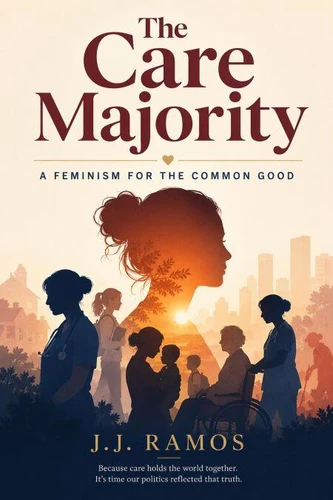
The Care Majority
Par :Formats :
Disponible dans votre compte client Decitre ou Furet du Nord dès validation de votre commande. Le format ePub est :
- Compatible avec une lecture sur My Vivlio (smartphone, tablette, ordinateur)
- Compatible avec une lecture sur liseuses Vivlio
- Pour les liseuses autres que Vivlio, vous devez utiliser le logiciel Adobe Digital Edition. Non compatible avec la lecture sur les liseuses Kindle, Remarkable et Sony
 , qui est-ce ?
Notre partenaire de plateforme de lecture numérique où vous retrouverez l'ensemble de vos ebooks gratuitement
Pour en savoir plus sur nos ebooks, consultez notre aide en ligne ici
C'est si simple ! Lisez votre ebook avec l'app Vivlio sur votre tablette, mobile ou ordinateur :

- FormatePub
- ISBN8235404342
- EAN9798235404342
- Date de parution08/06/2026
- Protection num.pas de protection
- Infos supplémentairesepub
- ÉditeurIoakim Ioakim
Résumé
The largest political constituency in the United States is the care majority - the parents, daughters, sons, aunts, paid caregivers, and care recipients whose lives turn on the work of holding other people together. It is also the constituency that has been politely told, for decades, to wait its turn. In The Care Majority, J. J. Ramos makes the political-economic case that a feminism organized around the common-good politics of care is both the most defensible feminism and the most viable winning politics of the next decade.
The book opens with the invisible foundation: the unpaid hours, the paid workforce, the people receiving care, and the historical political-economy that made all of this politically invisible. The middle documents the four crises now too large to hide: childcare, eldercare, the exclusion of domestic workers from the formal labor system, and the well-documented burnout of the professional care workforce.
The third part of the book names the constituency. Parents of young children, adult children of aging parents, paid care workers, teachers and nurses and social workers, the partners and friends who pick up the slack, the recipients of care - together, by any honest count, they are more than half of the country. Ramos profiles the organizing already underway (the National Domestic Workers Alliance, Caring Across Generations, MomsRising, Paid Leave for All), the policy program the movement has converged on (paid family and medical leave, universal childcare, fair wages for care workers, long-term care investment), and the cross-cutting coalition that the politics requires.
The closing chapters offer the constructive vision: what care-centered politics looks like, the international examples that have already proven it possible (Sweden, Germany, Quebec), and a closing argument that the care majority is the largest, most cross-cutting, and most morally compelling political constituency in the country. For readers of The Age of Dignity (Ai-jen Poo), Unfinished Business (Anne-Marie Slaughter), The Second Shift (Arlie Hochschild), and The Care Manifesto - and for any reader who has worked a paid job, a domestic shift, and a coordinating role inside the same twenty-four hours and wondered what to call that life.
The book opens with the invisible foundation: the unpaid hours, the paid workforce, the people receiving care, and the historical political-economy that made all of this politically invisible. The middle documents the four crises now too large to hide: childcare, eldercare, the exclusion of domestic workers from the formal labor system, and the well-documented burnout of the professional care workforce.
The third part of the book names the constituency. Parents of young children, adult children of aging parents, paid care workers, teachers and nurses and social workers, the partners and friends who pick up the slack, the recipients of care - together, by any honest count, they are more than half of the country. Ramos profiles the organizing already underway (the National Domestic Workers Alliance, Caring Across Generations, MomsRising, Paid Leave for All), the policy program the movement has converged on (paid family and medical leave, universal childcare, fair wages for care workers, long-term care investment), and the cross-cutting coalition that the politics requires.
The closing chapters offer the constructive vision: what care-centered politics looks like, the international examples that have already proven it possible (Sweden, Germany, Quebec), and a closing argument that the care majority is the largest, most cross-cutting, and most morally compelling political constituency in the country. For readers of The Age of Dignity (Ai-jen Poo), Unfinished Business (Anne-Marie Slaughter), The Second Shift (Arlie Hochschild), and The Care Manifesto - and for any reader who has worked a paid job, a domestic shift, and a coordinating role inside the same twenty-four hours and wondered what to call that life.
A propos de J.J. Ramos

8,99 €

Power in Her Hands
E-book
8,99 €
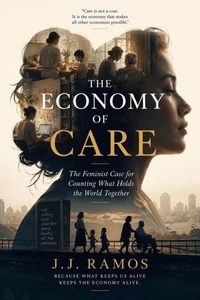
The Economy of Care
E-book
8,99 €

The Unfinished Republic
E-book
8,99 €

A More Perfect Union
E-book
8,99 €

8,99 €

Post-Feminism is a Lie
E-book
8,99 €
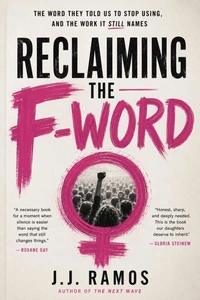
Reclaiming the F-Word
E-book
8,99 €
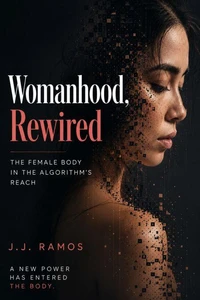

8,99 €
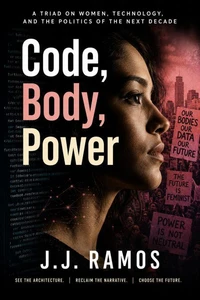
Code, Body, Power
E-book
8,99 €

8,99 €
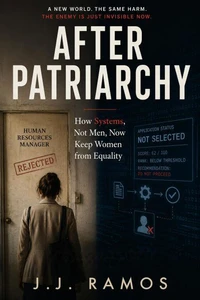
8,99 €