
Nouveauté
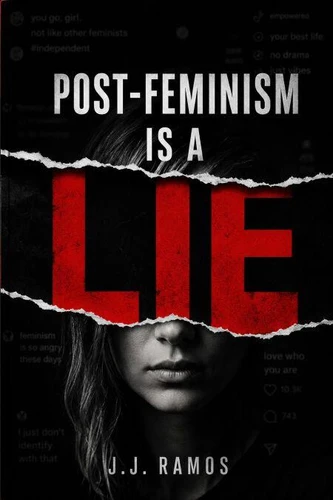
Post-Feminism is a Lie
Par :Formats :
Disponible dans votre compte client Decitre ou Furet du Nord dès validation de votre commande. Le format ePub est :
- Compatible avec une lecture sur My Vivlio (smartphone, tablette, ordinateur)
- Compatible avec une lecture sur liseuses Vivlio
- Pour les liseuses autres que Vivlio, vous devez utiliser le logiciel Adobe Digital Edition. Non compatible avec la lecture sur les liseuses Kindle, Remarkable et Sony
 , qui est-ce ?
Notre partenaire de plateforme de lecture numérique où vous retrouverez l'ensemble de vos ebooks gratuitement
Pour en savoir plus sur nos ebooks, consultez notre aide en ligne ici
C'est si simple ! Lisez votre ebook avec l'app Vivlio sur votre tablette, mobile ou ordinateur :

- FormatePub
- ISBN8235287440
- EAN9798235287440
- Date de parution05/06/2026
- Protection num.pas de protection
- Infos supplémentairesepub
- ÉditeurIoakim Ioakim
Résumé
A new message is being sold to women in 2026. It is cheerful. It is brand-safe. It is delivered, often, by other women, in voices calibrated to sound like a friend explaining something obvious. It says that feminism is over, that the work is done, that the wage gap is a methodological artifact, that harassment has been addressed, that any continued political organization is, at best, a habit and, at worst, an embarrassment.
In Post-Feminism is a Lie, J. J. Ramos argues that this message is not a neutral observation about historical progress. It is a strategically deployed political claim whose function is to demobilize feminism at the precise moment when material conditions for women are deteriorating - and the way the lie gains traction tells the movement what it has to do next. The book is in four parts. Part I traces where the post-feminist position came from (1982 onward), how it was repackaged by 1990s pop culture, and who profits when women believe the work is done.
Part II walks through the substantive evidence: the persistent wage gap and its real cause (the motherhood penalty); the post-Dobbs collapse of the reproductive-rights floor; the workplace that #MeToo never restructured; the documented worsening of women's online conditions since 2022. Part III asks why intelligent young women buy the lie anyway: the tradwife economy, the social cost of identifying as a feminist, the generational rhetorical fracture, and the loneliness crisis that the post-feminist message exploits.
Part IV is constructive: how to talk about feminism without apologizing, how to win the argument at the Thanksgiving table, and what feminist media, policy, and capital infrastructure the counter-story actually requires. Drawing on Susan Faludi's Backlash, Kate Manne's Down Girl, Amia Srinivasan's The Right to Sex, Naomi Wolf's The Beauty Myth, and the documented research on persuasion, deep canvassing, and the political economy of media, Ramos makes the case that "post-feminism" is the most expensive lie women have ever been sold - and gives the reader the tools to refuse it without sounding like a parody of what the post-feminists already mock.
For readers of Backlash, Down Girl, Trick Mirror, Of Boys and Men, The Right to Sex, and the rest of the J. J. Ramos catalog - written for the moment when the cheerful messengers of "you've won, now relax" are everywhere.
In Post-Feminism is a Lie, J. J. Ramos argues that this message is not a neutral observation about historical progress. It is a strategically deployed political claim whose function is to demobilize feminism at the precise moment when material conditions for women are deteriorating - and the way the lie gains traction tells the movement what it has to do next. The book is in four parts. Part I traces where the post-feminist position came from (1982 onward), how it was repackaged by 1990s pop culture, and who profits when women believe the work is done.
Part II walks through the substantive evidence: the persistent wage gap and its real cause (the motherhood penalty); the post-Dobbs collapse of the reproductive-rights floor; the workplace that #MeToo never restructured; the documented worsening of women's online conditions since 2022. Part III asks why intelligent young women buy the lie anyway: the tradwife economy, the social cost of identifying as a feminist, the generational rhetorical fracture, and the loneliness crisis that the post-feminist message exploits.
Part IV is constructive: how to talk about feminism without apologizing, how to win the argument at the Thanksgiving table, and what feminist media, policy, and capital infrastructure the counter-story actually requires. Drawing on Susan Faludi's Backlash, Kate Manne's Down Girl, Amia Srinivasan's The Right to Sex, Naomi Wolf's The Beauty Myth, and the documented research on persuasion, deep canvassing, and the political economy of media, Ramos makes the case that "post-feminism" is the most expensive lie women have ever been sold - and gives the reader the tools to refuse it without sounding like a parody of what the post-feminists already mock.
For readers of Backlash, Down Girl, Trick Mirror, Of Boys and Men, The Right to Sex, and the rest of the J. J. Ramos catalog - written for the moment when the cheerful messengers of "you've won, now relax" are everywhere.
A propos de J.J. Ramos

8,99 €

Power in Her Hands
E-book
8,99 €
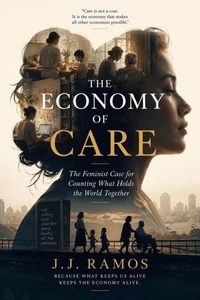
The Economy of Care
E-book
8,99 €
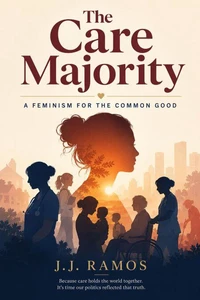
The Care Majority
E-book
8,99 €
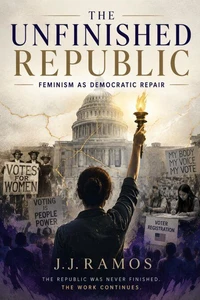
The Unfinished Republic
E-book
8,99 €
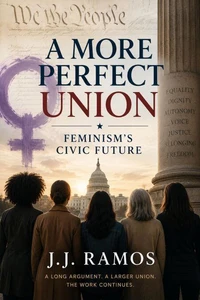
A More Perfect Union
E-book
8,99 €
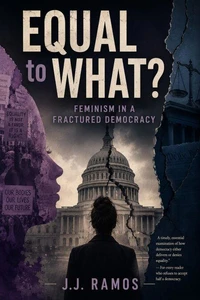
8,99 €
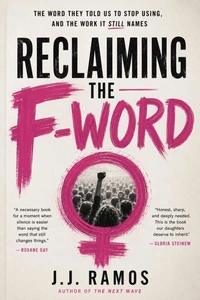
Reclaiming the F-Word
E-book
8,99 €
8,99 €
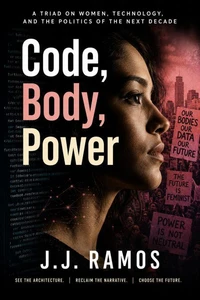
Code, Body, Power
E-book
8,99 €

8,99 €
8,99 €