

Nouveauté
After Patriarchy: What Feminism Becomes When the Enemy Stops Being a Man
Par :Formats :
Disponible dans votre compte client Decitre ou Furet du Nord dès validation de votre commande. Le format ePub est :
- Compatible avec une lecture sur My Vivlio (smartphone, tablette, ordinateur)
- Compatible avec une lecture sur liseuses Vivlio
- Pour les liseuses autres que Vivlio, vous devez utiliser le logiciel Adobe Digital Edition. Non compatible avec la lecture sur les liseuses Kindle, Remarkable et Sony
 , qui est-ce ?
Notre partenaire de plateforme de lecture numérique où vous retrouverez l'ensemble de vos ebooks gratuitement
Pour en savoir plus sur nos ebooks, consultez notre aide en ligne ici
C'est si simple ! Lisez votre ebook avec l'app Vivlio sur votre tablette, mobile ou ordinateur :

- FormatePub
- ISBN8235012646
- EAN9798235012646
- Date de parution01/06/2026
- Protection num.pas de protection
- Infos supplémentairesepub
- ÉditeurIoakim Ioakim
Résumé
For two centuries, feminism organized itself around an enemy that had a face. The father, the husband, the boss, the harasser, the legislator. A structure called patriarchy that, at its core, presupposed a patriarch. That enemy has changed shape. In After Patriarchy, J. J. Ramos argues that the structures most directly constraining women's lives in 2026 are no longer staffed by patriarchs. The hiring decision has migrated from a manager to a model.
The credit decision from a loan officer to an algorithm. The reproductive choice from a husband or a state to a market. The reputational economy from the public square to the platform. None of these systems were built to discriminate. All of them produce gendered outcomes anyway. And a feminism that keeps fighting men as the central enemy when the constraint is structural will keep winning the visible battles and losing the systemic war.
The book is in four parts. Part I argues that the diagnostic concept of patriarchy has aged out. Part II maps the systems that replaced it: the algorithm as authority, the market as mother, the platform as public square, the optimization as norm. Part III refuses to dodge the internal feminist conflicts that surface when the external enemy weakens - over class, over race, over age, over what the word woman now names.
Part IV is constructive: a feminism of structure (audit law, procurement, antitrust), a feminism of solidarity (care-worker organizing, the new feminist unionism), and a feminism of build (alternative infrastructure, women-led capital, the institutions the next wave will need). Drawing on the feminist tradition from Wollstonecraft and de Beauvoir to bell hooks, Kimberlé Crenshaw, Kate Manne, and Amia Srinivasan, and on the algorithmic-justice scholarship of Joy Buolamwini, Safiya Umoja Noble, Cathy O'Neil, and Ruha Benjamin, Ramos makes the case that retiring the inherited enemy is the precondition for the next stage of feminist work.
The post-patriarchy fight is harder than the one before it. It is also more honest. For readers of The Right to Sex, Down Girl, Invisible Women, The Second Sex, and The Next Wave: Feminism After the Algorithm - written from the moment the inherited movement vocabulary stopped reaching the constraint it was supposed to name.
The credit decision from a loan officer to an algorithm. The reproductive choice from a husband or a state to a market. The reputational economy from the public square to the platform. None of these systems were built to discriminate. All of them produce gendered outcomes anyway. And a feminism that keeps fighting men as the central enemy when the constraint is structural will keep winning the visible battles and losing the systemic war.
The book is in four parts. Part I argues that the diagnostic concept of patriarchy has aged out. Part II maps the systems that replaced it: the algorithm as authority, the market as mother, the platform as public square, the optimization as norm. Part III refuses to dodge the internal feminist conflicts that surface when the external enemy weakens - over class, over race, over age, over what the word woman now names.
Part IV is constructive: a feminism of structure (audit law, procurement, antitrust), a feminism of solidarity (care-worker organizing, the new feminist unionism), and a feminism of build (alternative infrastructure, women-led capital, the institutions the next wave will need). Drawing on the feminist tradition from Wollstonecraft and de Beauvoir to bell hooks, Kimberlé Crenshaw, Kate Manne, and Amia Srinivasan, and on the algorithmic-justice scholarship of Joy Buolamwini, Safiya Umoja Noble, Cathy O'Neil, and Ruha Benjamin, Ramos makes the case that retiring the inherited enemy is the precondition for the next stage of feminist work.
The post-patriarchy fight is harder than the one before it. It is also more honest. For readers of The Right to Sex, Down Girl, Invisible Women, The Second Sex, and The Next Wave: Feminism After the Algorithm - written from the moment the inherited movement vocabulary stopped reaching the constraint it was supposed to name.
A propos de J.J. Ramos


8,99 €

Power in Her Hands
E-book
8,99 €


The Economy of Care
E-book
8,99 €

The Care Majority
E-book
8,99 €

The Unfinished Republic
E-book
8,99 €

A More Perfect Union
E-book
8,99 €

8,99 €

Post-Feminism is a Lie
E-book
8,99 €
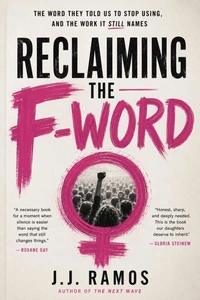
Reclaiming the F-Word
E-book
8,99 €


8,99 €

Code, Body, Power
E-book
8,99 €

8,99 €

8,99 €