
Nouveauté
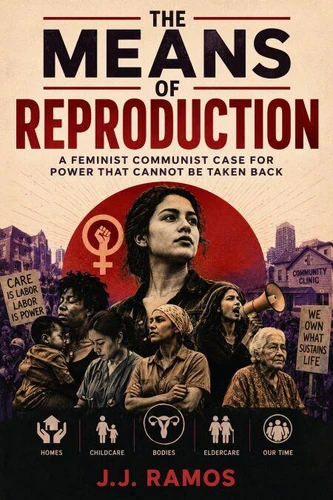
The Means of Reproduction
Par :Formats :
Disponible dans votre compte client Decitre ou Furet du Nord dès validation de votre commande. Le format ePub est :
- Compatible avec une lecture sur My Vivlio (smartphone, tablette, ordinateur)
- Compatible avec une lecture sur liseuses Vivlio
- Pour les liseuses autres que Vivlio, vous devez utiliser le logiciel Adobe Digital Edition. Non compatible avec la lecture sur les liseuses Kindle, Remarkable et Sony
 , qui est-ce ?
Notre partenaire de plateforme de lecture numérique où vous retrouverez l'ensemble de vos ebooks gratuitement
Pour en savoir plus sur nos ebooks, consultez notre aide en ligne ici
C'est si simple ! Lisez votre ebook avec l'app Vivlio sur votre tablette, mobile ou ordinateur :

- FormatePub
- ISBN8235533530
- EAN9798235533530
- Date de parution13/06/2026
- Protection num.pas de protection
- Infos supplémentairesepub
- ÉditeurIoakim Ioakim
Résumé
Women have always been admitted to structures that men own, and admission is permission, and permission can be withdrawn. The argument is feminist communist, and the words are used carefully. Feminist because the labor at the center of the book is the labor that produces and reproduces the conditions of human life: the wombs, the homes, the childcare, the eldercare, the kin networks, the time and energy of the people doing the work.
Communist because the question the book takes seriously is the property question: who owns the conditions of this labor, and what would it mean for the women whose lives are organized around it to own those conditions collectively. The book opens with the rollback decade, defines the term means of reproduction, and documents why representation without ownership has produced reversible gains. The middle moves through the material base: the womb as the original site of disciplined reproductive labor, the household as a productive site the official economy refuses to count, the contemporary structure of who owns the care infrastructure (private equity in eldercare and childcare, hospital consolidation, the staffing-agency rent on domestic labor), and marriage as a labor contract that transfers reproductive labor without compensation.
The third part recovers the historical convergence - Kollontai, Goldman, Wages for Housework (Dalla Costa, James, Federici), Davis, Vogel, Mies - and reframes the care majority as a political class with shared material interests. The closing chapters name the three enforcement mechanisms of durable power: cooperative ownership of care infrastructure, reproductive autonomy as economic right, and the political organization of the care majority as a class.
Communist because the question the book takes seriously is the property question: who owns the conditions of this labor, and what would it mean for the women whose lives are organized around it to own those conditions collectively. The book opens with the rollback decade, defines the term means of reproduction, and documents why representation without ownership has produced reversible gains. The middle moves through the material base: the womb as the original site of disciplined reproductive labor, the household as a productive site the official economy refuses to count, the contemporary structure of who owns the care infrastructure (private equity in eldercare and childcare, hospital consolidation, the staffing-agency rent on domestic labor), and marriage as a labor contract that transfers reproductive labor without compensation.
The third part recovers the historical convergence - Kollontai, Goldman, Wages for Housework (Dalla Costa, James, Federici), Davis, Vogel, Mies - and reframes the care majority as a political class with shared material interests. The closing chapters name the three enforcement mechanisms of durable power: cooperative ownership of care infrastructure, reproductive autonomy as economic right, and the political organization of the care majority as a class.
A propos de J.J. Ramos


Power in Her Hands
E-book
8,99 €
The Economy of Care
E-book
8,99 €

The Care Majority
E-book
8,99 €

The Unfinished Republic
E-book
8,99 €

A More Perfect Union
E-book
8,99 €

8,99 €

Post-Feminism is a Lie
E-book
8,99 €
Reclaiming the F-Word
E-book
8,99 €


8,99 €

Code, Body, Power
E-book
8,99 €

8,99 €


8,99 €