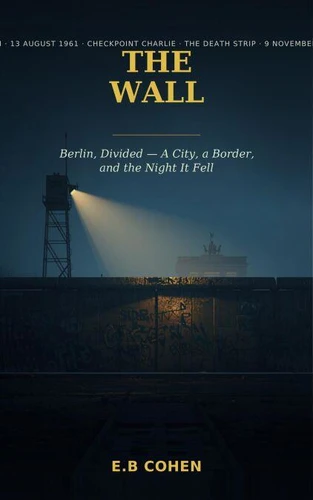
On the night of August 13, 1961, Berliners woke to find their city severed by barbed wire. Within days, concrete rose where streets and families had once flowed freely. For twenty-eight years the Berlin Wall stood as the most visible scar of the Cold War-a barrier that divided not only a city but an entire world into East and West. The Wall tells the human story behind the concrete: the desperate escapes and the guards ordered to stop them, the tunnels dug beneath the death strip, the leaders who built and defended the barrier, and the ordinary people whose lives were split down the middle.
From Checkpoint Charlie to the watchtowers and no-man's-land, it traces how a single night's decision hardened into one of history's most infamous frontiers. Then, on November 9, 1989, the impossible happened. This is the gripping account of how the Wall rose, how it held a continent hostage, and how-almost by accident-it finally came down, taking the Iron Curtain with it.
On the night of August 13, 1961, Berliners woke to find their city severed by barbed wire. Within days, concrete rose where streets and families had once flowed freely. For twenty-eight years the Berlin Wall stood as the most visible scar of the Cold War-a barrier that divided not only a city but an entire world into East and West. The Wall tells the human story behind the concrete: the desperate escapes and the guards ordered to stop them, the tunnels dug beneath the death strip, the leaders who built and defended the barrier, and the ordinary people whose lives were split down the middle.
From Checkpoint Charlie to the watchtowers and no-man's-land, it traces how a single night's decision hardened into one of history's most infamous frontiers. Then, on November 9, 1989, the impossible happened. This is the gripping account of how the Wall rose, how it held a continent hostage, and how-almost by accident-it finally came down, taking the Iron Curtain with it.

 , qui est-ce ?