Thalia Brookstone is a nonfiction author known for writing reflective books on psychology, personal growth, and emotional balance. Her work blends modern behavioral insights with calm, thoughtful storytelling, encouraging readers to approach life with greater self-awareness, resilience, and clarity.
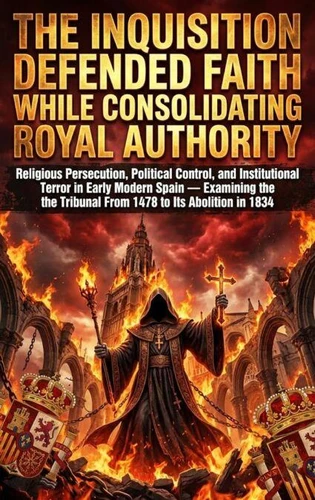
The Inquisition Defended Faith While Consolidating Royal Authority. Religious Persecution, Political Control, and Institutional Terror in Early Modern Spain — Examining the Tribunal From 1478 to Its Abolition in 1834
Par :Formats :
Disponible dans votre compte client Decitre ou Furet du Nord dès validation de votre commande. Le format ePub est :
- Compatible avec une lecture sur My Vivlio (smartphone, tablette, ordinateur)
- Compatible avec une lecture sur liseuses Vivlio
- Pour les liseuses autres que Vivlio, vous devez utiliser le logiciel Adobe Digital Edition. Non compatible avec la lecture sur les liseuses Kindle, Remarkable et Sony
 , qui est-ce ?
Notre partenaire de plateforme de lecture numérique où vous retrouverez l'ensemble de vos ebooks gratuitement
Pour en savoir plus sur nos ebooks, consultez notre aide en ligne ici
C'est si simple ! Lisez votre ebook avec l'app Vivlio sur votre tablette, mobile ou ordinateur :

- Nombre de pages211
- FormatePub
- ISBN978-3-565-20323-9
- EAN9783565203239
- Date de parution28/01/2026
- Protection num.pas de protection
- Taille2 Mo
- Infos supplémentairesepub
- ÉditeurEmphaloz Publishing House
Résumé
The Spanish Inquisition is remembered for torture chambers and public burnings. Yet its primary function was bureaucratic-investigating ancestry, interrogating neighbors, recording confessions, confiscating property, and maintaining dossiers on entire communities. Established by Ferdinand and Isabella in 1478, the tribunal served dual purposes: enforcing Catholic orthodoxy after the Reconquista and extending monarchical power through religious surveillance.
This book traces the Inquisition as institutional machinery.
It examines the targeting of conversos-Jewish converts to Christianity suspected of secret Judaism-through genealogical investigations and neighbor denunciations. It follows moriscos-converted Muslims-facing similar scrutiny despite formal baptism. It reveals how the tribunal expanded beyond religious minorities to police Old Christian populations for blasphemy, sexual deviance, possession of prohibited books, and ideological nonconformity.
It examines the targeting of conversos-Jewish converts to Christianity suspected of secret Judaism-through genealogical investigations and neighbor denunciations. It follows moriscos-converted Muslims-facing similar scrutiny despite formal baptism. It reveals how the tribunal expanded beyond religious minorities to police Old Christian populations for blasphemy, sexual deviance, possession of prohibited books, and ideological nonconformity.