Thalia Brookstone is a nonfiction author known for writing reflective books on psychology, personal growth, and emotional balance. Her work blends modern behavioral insights with calm, thoughtful storytelling, encouraging readers to approach life with greater self-awareness, resilience, and clarity.
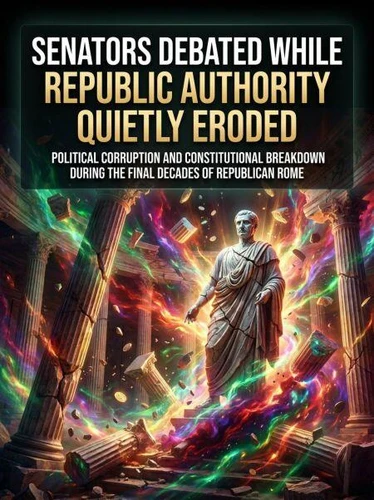
Senators Debated While Republic Authority Quietly Eroded. Political corruption and constitutional breakdown during the final decades of republican Rome
Par :Formats :
Disponible dans votre compte client Decitre ou Furet du Nord dès validation de votre commande. Le format ePub est :
- Compatible avec une lecture sur My Vivlio (smartphone, tablette, ordinateur)
- Compatible avec une lecture sur liseuses Vivlio
- Pour les liseuses autres que Vivlio, vous devez utiliser le logiciel Adobe Digital Edition. Non compatible avec la lecture sur les liseuses Kindle, Remarkable et Sony
 , qui est-ce ?
Notre partenaire de plateforme de lecture numérique où vous retrouverez l'ensemble de vos ebooks gratuitement
Pour en savoir plus sur nos ebooks, consultez notre aide en ligne ici
C'est si simple ! Lisez votre ebook avec l'app Vivlio sur votre tablette, mobile ou ordinateur :

- Nombre de pages235
- FormatePub
- ISBN978-3-565-47795-1
- EAN9783565477951
- Date de parution05/06/2026
- Protection num.pas de protection
- Taille1 Mo
- Infos supplémentairesepub
- ÉditeurEmphaloz Publishing House
Résumé
The Roman Republic collapsed long before emperors openly ruled it. Behind public speeches and legal tradition, wealth, military influence, and personal ambition steadily weakened institutions once designed to prevent concentrated power. Constitutional balance survived increasingly as ceremony rather than reality.
This book examines the institutional crisis that consumed the late Roman Republic.
Senators defended republican legality while powerful generals accumulated private armies, economic patronage, and influence over popular assemblies. Corruption spread through elections, provincial administration, and judicial systems unable to restrain elite competition. The narrative also explores the political conflict between the conservative Optimates and the reformist Populares. Agrarian reform, citizenship expansion, and economic inequality intensified struggles over who controlled the republic's future.
Public support became a weapon as politicians appealed directly to urban crowds and military loyalty instead of senatorial consensus. Rome emerges here as a state whose legal structures failed gradually under pressures generated by imperial expansion itself. The republic did not fall from external invasion, but from the inability of its institutions to contain the ambitions they had helped create.
Senators defended republican legality while powerful generals accumulated private armies, economic patronage, and influence over popular assemblies. Corruption spread through elections, provincial administration, and judicial systems unable to restrain elite competition. The narrative also explores the political conflict between the conservative Optimates and the reformist Populares. Agrarian reform, citizenship expansion, and economic inequality intensified struggles over who controlled the republic's future.
Public support became a weapon as politicians appealed directly to urban crowds and military loyalty instead of senatorial consensus. Rome emerges here as a state whose legal structures failed gradually under pressures generated by imperial expansion itself. The republic did not fall from external invasion, but from the inability of its institutions to contain the ambitions they had helped create.