SOLDES
Jusqu'à -70% sur une sélection d'articles*
- Accueil /
- Thalia Brookstone
Thalia Brookstone

Dernière sortie
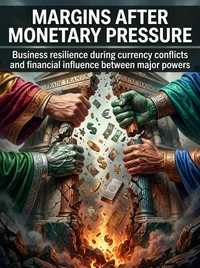
Margins After Monetary Pressure
Business resilience is increasingly determined by forces outside traditional competition. Currency influence, financial restrictions, and monetary alliances now affect supply chains, investment decisions, and market access with growing intensity.
This book investigates how monetary power influences international business. It focuses on the ways financial influence alters corporate planning long before visible political conflicts emerge.
The discussion centers on three operational realities.
Financial dependence on dominant currencies creates structural exposure. Capital allocation increasingly reflects geopolitical priorities rather than purely economic calculations. Regulatory fragmentation across major economic blocs introduces new uncertainty into long-term investment planning. The result is a business environment where financial systems function as channels of strategic influence.
Executives must evaluate not only operational efficiency but also exposure to monetary pressure originating far beyond their industry. Rather than predicting future crises, the book provides a framework for understanding why financial shocks travel rapidly through interconnected markets. It highlights the mechanisms that transform political competition into measurable business consequences. Across Europe and global export markets, organizations face a period where financial stability and geopolitical alignment increasingly overlap.
Understanding that intersection has become essential for strategic planning.
Financial dependence on dominant currencies creates structural exposure. Capital allocation increasingly reflects geopolitical priorities rather than purely economic calculations. Regulatory fragmentation across major economic blocs introduces new uncertainty into long-term investment planning. The result is a business environment where financial systems function as channels of strategic influence.
Executives must evaluate not only operational efficiency but also exposure to monetary pressure originating far beyond their industry. Rather than predicting future crises, the book provides a framework for understanding why financial shocks travel rapidly through interconnected markets. It highlights the mechanisms that transform political competition into measurable business consequences. Across Europe and global export markets, organizations face a period where financial stability and geopolitical alignment increasingly overlap.
Understanding that intersection has become essential for strategic planning.
Business resilience is increasingly determined by forces outside traditional competition. Currency influence, financial restrictions, and monetary alliances now affect supply chains, investment decisions, and market access with growing intensity.
This book investigates how monetary power influences international business. It focuses on the ways financial influence alters corporate planning long before visible political conflicts emerge.
The discussion centers on three operational realities.
Financial dependence on dominant currencies creates structural exposure. Capital allocation increasingly reflects geopolitical priorities rather than purely economic calculations. Regulatory fragmentation across major economic blocs introduces new uncertainty into long-term investment planning. The result is a business environment where financial systems function as channels of strategic influence.
Executives must evaluate not only operational efficiency but also exposure to monetary pressure originating far beyond their industry. Rather than predicting future crises, the book provides a framework for understanding why financial shocks travel rapidly through interconnected markets. It highlights the mechanisms that transform political competition into measurable business consequences. Across Europe and global export markets, organizations face a period where financial stability and geopolitical alignment increasingly overlap.
Understanding that intersection has become essential for strategic planning.
Financial dependence on dominant currencies creates structural exposure. Capital allocation increasingly reflects geopolitical priorities rather than purely economic calculations. Regulatory fragmentation across major economic blocs introduces new uncertainty into long-term investment planning. The result is a business environment where financial systems function as channels of strategic influence.
Executives must evaluate not only operational efficiency but also exposure to monetary pressure originating far beyond their industry. Rather than predicting future crises, the book provides a framework for understanding why financial shocks travel rapidly through interconnected markets. It highlights the mechanisms that transform political competition into measurable business consequences. Across Europe and global export markets, organizations face a period where financial stability and geopolitical alignment increasingly overlap.
Understanding that intersection has become essential for strategic planning.
Les livres de Thalia Brookstone
Nouveauté

Nouveauté

The Courage to Not Know. Accepting Uncertainty as the Natural Path to Peace and Resilience
Thalia Brookstone
E-book
9,99 €
Nouveauté

Steady in the Storm. Managing Anger Before It Manages Your Relationships and Career
Thalia Brookstone
E-book
9,99 €
Nouveauté

Open Awareness. Mindfulness for People Who Think Meditating Is a Waste of Time
Thalia Brookstone
E-book
9,99 €

Systems Liberation: Work Once, Earn Forever. Building Automated Business Frameworks
Thalia Brookstone
E-book
8,99 €

8,99 €

27,99 €

27,99 €

Ottoman Power: 600 Years of Islamic Empire. Sultans, Conquests, and Imperial Decline
Thalia Brookstone
E-book
8,99 €

8,99 €

27,99 €

8,99 €


8,49 €


Why Collapse Narratives Go Viral. How Reset Myths Spread, Endure, and Shape Public Memory
Thalia Brookstone
E-book
8,99 €

8,49 €