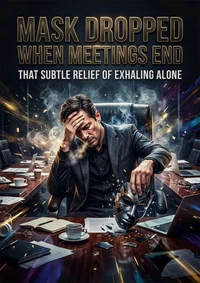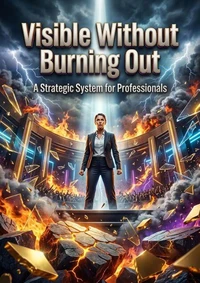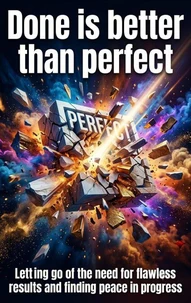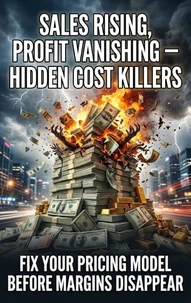
Thalia Brookstone is a nonfiction author known for writing reflective books on psychology, personal growth, and emotional balance. Her work blends modern behavioral insights with calm, thoughtful storytelling, encouraging readers to approach life with greater self-awareness, resilience, and clarity.
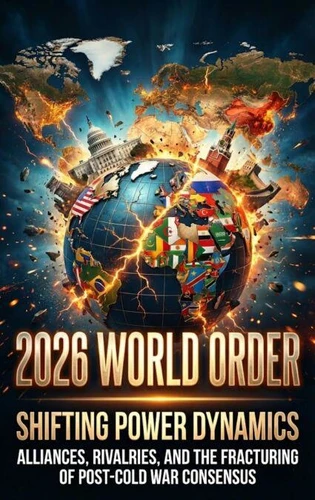
2026 World Order: Shifting Power Dynamics. Alliances, Rivalries, and the Fracturing of Post-Cold War Consensus
Par :Formats :
Disponible dans votre compte client Decitre ou Furet du Nord dès validation de votre commande. Le format ePub est :
- Compatible avec une lecture sur My Vivlio (smartphone, tablette, ordinateur)
- Compatible avec une lecture sur liseuses Vivlio
- Pour les liseuses autres que Vivlio, vous devez utiliser le logiciel Adobe Digital Edition. Non compatible avec la lecture sur les liseuses Kindle, Remarkable et Sony
 , qui est-ce ?
Notre partenaire de plateforme de lecture numérique où vous retrouverez l'ensemble de vos ebooks gratuitement
Pour en savoir plus sur nos ebooks, consultez notre aide en ligne ici
C'est si simple ! Lisez votre ebook avec l'app Vivlio sur votre tablette, mobile ou ordinateur :

- Nombre de pages226
- FormatePub
- ISBN978-3-565-28013-1
- EAN9783565280131
- Date de parution27/02/2026
- Protection num.pas de protection
- Taille2 Mo
- Infos supplémentairesepub
- ÉditeurEmphaloz Publishing House
Résumé
The international order constructed after 1991 is visibly fracturing. The assumptions that underpinned three decades of global governance-American unipolarity, the liberalizing force of economic interdependence, the stabilizing function of multilateral institutions-are being tested simultaneously by great power rivalry, regional conflicts, economic nationalism, and the emergence of alternative institutional frameworks that bypass Western-led architecture entirely.
2026 World Order examines this transition in real historical time, situating the current moment within the longer arc of power transitions that have periodically restructured international relations since the Congress of Vienna. Drawing on diplomatic records, think-tank assessments, UN Security Council documentation, and the scholarship of international relations historians, each chapter examines a distinct axis of change: the US-China strategic competition and its implications for trade, technology, and military posture; the reconfiguration of European security following the Russia-Ukraine war; the assertive multilateralism of the Global South through BRICS expansion and African Union institutional development; and the contested governance of emerging domains-artificial intelligence, space, and digital infrastructure-where no settled international framework yet exists. The final section examines what historical precedent suggests about power transitions of this magnitude: how they have been managed, how they have failed, and what the documented record of previous international order collapses-1815, 1919, 1945, 1991-reveals about the conditions that determine whether transition produces new stability or prolonged conflict.
2026 World Order is a serious, evidence-based examination of the present moment as a historical inflection point-essential for readers who understand that the decisions being made today will define the international landscape for the next generation.
2026 World Order examines this transition in real historical time, situating the current moment within the longer arc of power transitions that have periodically restructured international relations since the Congress of Vienna. Drawing on diplomatic records, think-tank assessments, UN Security Council documentation, and the scholarship of international relations historians, each chapter examines a distinct axis of change: the US-China strategic competition and its implications for trade, technology, and military posture; the reconfiguration of European security following the Russia-Ukraine war; the assertive multilateralism of the Global South through BRICS expansion and African Union institutional development; and the contested governance of emerging domains-artificial intelligence, space, and digital infrastructure-where no settled international framework yet exists. The final section examines what historical precedent suggests about power transitions of this magnitude: how they have been managed, how they have failed, and what the documented record of previous international order collapses-1815, 1919, 1945, 1991-reveals about the conditions that determine whether transition produces new stability or prolonged conflict.
2026 World Order is a serious, evidence-based examination of the present moment as a historical inflection point-essential for readers who understand that the decisions being made today will define the international landscape for the next generation.