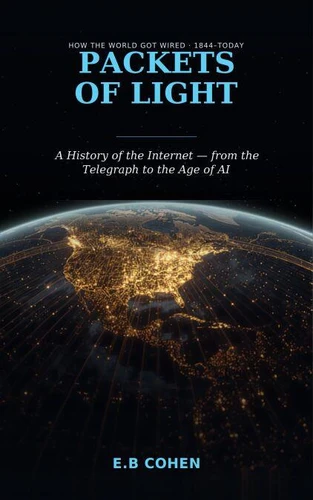
In the autumn of 1969, a tired graduate student tried to log in to a computer four hundred miles away. He typed an L, then an O, and the whole system crashed. It was the first message ever sent over the network that would become the Internet, and it was a failure. From that stumbling beginning would grow the most transformative technology in human history. This is the whole sweep of that astonishing story - the telegraph that first turned thought into electricity, the Cold War laboratories where packet switching was born, the ragtag engineers who wrote the rules that let any computer talk to any other, and the quiet British programmer who gave the world the Web and refused to patent it.
It is a story of accidents and idealism, of open standards that beat corporate walled gardens, and of a network that its own creators never imagined would carry the whole of human life. Clear, vivid, and honest about what we know and what is only myth - that the Internet is the Web, that it was built to survive a nuclear war, that it sprang from a lone genius - this is popular history at its most illuminating.
It carries the reader from the first crackle down a wire to the age of AI, and shows how a chain of small human choices built the strange, glittering, indispensable world we now live inside.
In the autumn of 1969, a tired graduate student tried to log in to a computer four hundred miles away. He typed an L, then an O, and the whole system crashed. It was the first message ever sent over the network that would become the Internet, and it was a failure. From that stumbling beginning would grow the most transformative technology in human history. This is the whole sweep of that astonishing story - the telegraph that first turned thought into electricity, the Cold War laboratories where packet switching was born, the ragtag engineers who wrote the rules that let any computer talk to any other, and the quiet British programmer who gave the world the Web and refused to patent it.
It is a story of accidents and idealism, of open standards that beat corporate walled gardens, and of a network that its own creators never imagined would carry the whole of human life. Clear, vivid, and honest about what we know and what is only myth - that the Internet is the Web, that it was built to survive a nuclear war, that it sprang from a lone genius - this is popular history at its most illuminating.
It carries the reader from the first crackle down a wire to the age of AI, and shows how a chain of small human choices built the strange, glittering, indispensable world we now live inside.

 , qui est-ce ?