Thalia Brookstone is a nonfiction author known for writing reflective books on psychology, personal growth, and emotional balance. Her work blends modern behavioral insights with calm, thoughtful storytelling, encouraging readers to approach life with greater self-awareness, resilience, and clarity.
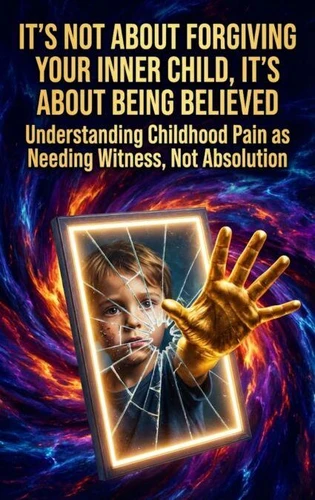
It's Not About Forgiving Your Inner Child, It's About Being Believed. Understanding Childhood Pain as Needing Witness, Not Absolution
Par :Formats :
Disponible dans votre compte client Decitre ou Furet du Nord dès validation de votre commande. Le format ePub est :
- Compatible avec une lecture sur My Vivlio (smartphone, tablette, ordinateur)
- Compatible avec une lecture sur liseuses Vivlio
- Pour les liseuses autres que Vivlio, vous devez utiliser le logiciel Adobe Digital Edition. Non compatible avec la lecture sur les liseuses Kindle, Remarkable et Sony
 , qui est-ce ?
Notre partenaire de plateforme de lecture numérique où vous retrouverez l'ensemble de vos ebooks gratuitement
Pour en savoir plus sur nos ebooks, consultez notre aide en ligne ici
C'est si simple ! Lisez votre ebook avec l'app Vivlio sur votre tablette, mobile ou ordinateur :

- Nombre de pages156
- FormatePub
- ISBN978-3-565-21233-0
- EAN9783565212330
- Date de parution30/01/2026
- Protection num.pas de protection
- Taille2 Mo
- Infos supplémentairesepub
- ÉditeurEmphaloz Publishing House
Résumé
This book explores the often-misunderstood concept of inner child work-particularly the ways we're told to "forgive our inner child" or "heal the wounded child within" when what that younger self actually needs isn't forgiveness but to finally be believed. It examines how therapeutic language around inner child healing can sometimes recreate the original wound: the pressure to understand, rationalize, or move past childhood pain before truly acknowledging what happened and how it felt.
Rather than focusing on forgiveness as the path to healing, the text reframes inner child work as fundamentally about witness-giving your younger self the validation, belief, and acknowledgment they never received.
It explores the patterns that block this witness: the internalized minimization of your own experiences, the pressure to forgive perpetrators or circumstances prematurely, the shame of still being affected by "old" pain. What does it mean when your inner child doesn't want to forgive, doesn't want to understand why things happened-but simply wants someone to say "that was real, and it mattered"? Through compassionate psychological insight, the book examines what actually allows childhood pain to integrate versus what keeps it frozen-and why being witnessed often matters more than forgiveness, understanding, or moving on.
This isn't about healing your inner child or achieving closure-it's about recognizing that some parts of you are still waiting to be believed, and that this belief might be more transformative than any forgiveness work.
It explores the patterns that block this witness: the internalized minimization of your own experiences, the pressure to forgive perpetrators or circumstances prematurely, the shame of still being affected by "old" pain. What does it mean when your inner child doesn't want to forgive, doesn't want to understand why things happened-but simply wants someone to say "that was real, and it mattered"? Through compassionate psychological insight, the book examines what actually allows childhood pain to integrate versus what keeps it frozen-and why being witnessed often matters more than forgiveness, understanding, or moving on.
This isn't about healing your inner child or achieving closure-it's about recognizing that some parts of you are still waiting to be believed, and that this belief might be more transformative than any forgiveness work.