
Nouveauté
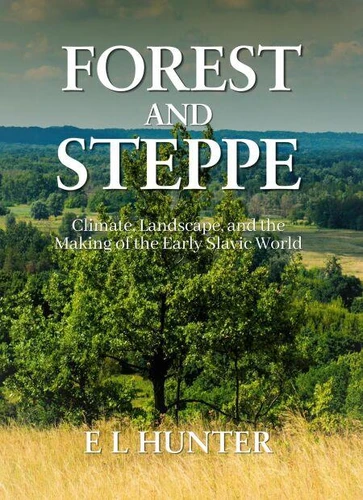
Forest and Steppe: Climate, Landscape, and the Making of the Early Slavic World
Par :Formats :
Disponible dans votre compte client Decitre ou Furet du Nord dès validation de votre commande. Le format ePub protégé est :
- Compatible avec une lecture sur My Vivlio (smartphone, tablette, ordinateur)
- Compatible avec une lecture sur liseuses Vivlio
- Pour les liseuses autres que Vivlio, vous devez utiliser le logiciel Adobe Digital Edition. Non compatible avec la lecture sur les liseuses Kindle, Remarkable et Sony
- Non compatible avec un achat hors France métropolitaine
 , qui est-ce ?
Notre partenaire de plateforme de lecture numérique où vous retrouverez l'ensemble de vos ebooks gratuitement
Pour en savoir plus sur nos ebooks, consultez notre aide en ligne ici
C'est si simple ! Lisez votre ebook avec l'app Vivlio sur votre tablette, mobile ou ordinateur :

- FormatePub
- ISBN8235513655
- EAN9798235513655
- Date de parution01/08/2026
- Protection num.Adobe DRM
- Infos supplémentairesepub
- ÉditeurIoakim Ioakim
Résumé
At Novgorod's excavated cultural layers, wooden street planking dates to specific years through dendrochronology, birchbark documents preserve household correspondence, and pollen records trace centuries of forest clearance in the surrounding hinterland. This is the evidence from which the environmental history of the early Slavic world can be reconstructed. Forest and Steppe draws together palynological, dendrochronological, zooarchaeological, and textual evidence to trace how climate, ecology, and geography shaped the East Slavic populations across seven centuries, from the Prague-Korchak expansion of the sixth century to the environmental legacies of the Kievan Rus state-formation period. Across the forest zone, podseka slash-and-burn cultivators adapted to shifting forests through the Late Antique Little Ice Age.
In the forest-steppe, chernozem soils supported the agricultural surplus behind Kievan Rus consolidation, while along the great rivers the fur trade drove beaver populations toward near-elimination and pulled dirham silver from the Islamic world into Rus hoards. On the steppe frontier, Avar, Khazar, Pecheneg, and Cuman confederations shaped Rus political-military development through continuous interaction. By the thirteenth century, accelerated deforestation, faunal changes, and anthropogenic soil modification at urban sites marked a landscape reshaped by state formation.
Forest and Steppe offers a comprehensive environmental history of the early Slavic world, drawing on the interdisciplinary methodologies that now define medieval environmental studies.
In the forest-steppe, chernozem soils supported the agricultural surplus behind Kievan Rus consolidation, while along the great rivers the fur trade drove beaver populations toward near-elimination and pulled dirham silver from the Islamic world into Rus hoards. On the steppe frontier, Avar, Khazar, Pecheneg, and Cuman confederations shaped Rus political-military development through continuous interaction. By the thirteenth century, accelerated deforestation, faunal changes, and anthropogenic soil modification at urban sites marked a landscape reshaped by state formation.
Forest and Steppe offers a comprehensive environmental history of the early Slavic world, drawing on the interdisciplinary methodologies that now define medieval environmental studies.
A propos de E L Hunter




8,99 €




7,49 €


6,99 €

8,99 €

5,99 €