SOLDES
Jusqu'à -70% sur une sélection d'articles*

Nouveauté
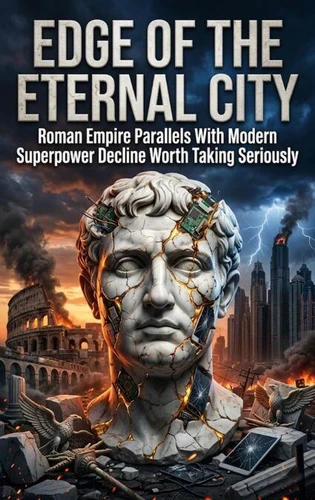
Edge of the Eternal City. Roman Empire Parallels With Modern Superpower Decline Worth Taking Seriously
Par :Formats :
Disponible dans votre compte client Decitre ou Furet du Nord dès validation de votre commande. Le format ePub est :
- Compatible avec une lecture sur My Vivlio (smartphone, tablette, ordinateur)
- Compatible avec une lecture sur liseuses Vivlio
- Pour les liseuses autres que Vivlio, vous devez utiliser le logiciel Adobe Digital Edition. Non compatible avec la lecture sur les liseuses Kindle, Remarkable et Sony
 , qui est-ce ?
Notre partenaire de plateforme de lecture numérique où vous retrouverez l'ensemble de vos ebooks gratuitement
Pour en savoir plus sur nos ebooks, consultez notre aide en ligne ici
C'est si simple ! Lisez votre ebook avec l'app Vivlio sur votre tablette, mobile ou ordinateur :

- Nombre de pages211
- FormatePub
- ISBN978-3-565-46206-3
- EAN9783565462063
- Date de parution27/05/2026
- Protection num.pas de protection
- Taille2 Mo
- Infos supplémentairesepub
- ÉditeurEmphaloz Publishing House
Résumé
This book reads the long unravelling of Rome not as a moral fable but as a template for how superpowers strain their own foundations, linking ancient imperial overstretch, political fragmentation, and economic stress to the quiet vulnerabilities of today's global powers. It argues that the value of Rome lies less in predicting doom than in spotlighting enduring patterns-how dominance can outpace capacity, how elites adapt unevenly, and how systems cling to the old order while the world beneath them shifts.
The first pattern is overextension and imperial burden: Rome's expansive borders and heavy military commitments drained resources, eroded the tax base, and turned frontier defense into a permanent fiscal drag, a dynamic modern great powers still wrestle with through overseas deployments and global commitments.
The second is institutional decay and political polarisation: the late Roman state saw repeated leadership crises, elite infighting, and a loss of public trust in institutions, paralleling contemporary concerns about gridlock, populist fragmentation, and weakened governance in advanced democracies. The third is economic strain and social fracture: currency debasement, widening inequality, and the erosion of civic participation in Rome mirror current debates over debt, inflation, and the hollowing-out of middle-class cohesion, suggesting that decline often begins as a slow, visible deformation of everyday life rather than a single catastrophe.
The second is institutional decay and political polarisation: the late Roman state saw repeated leadership crises, elite infighting, and a loss of public trust in institutions, paralleling contemporary concerns about gridlock, populist fragmentation, and weakened governance in advanced democracies. The third is economic strain and social fracture: currency debasement, widening inequality, and the erosion of civic participation in Rome mirror current debates over debt, inflation, and the hollowing-out of middle-class cohesion, suggesting that decline often begins as a slow, visible deformation of everyday life rather than a single catastrophe.