A routine disruptor who overcame chaos in his consulting days, crafting self-help habit systems, business guides for flexible operations, and historical accounts of productivity shifts in wartime economies.
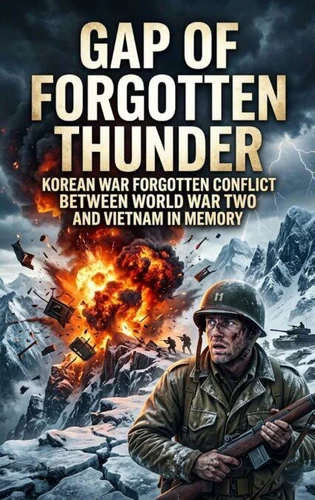
Gap of Forgotten Thunder. Korean War Forgotten Conflict Between World War Two and Vietnam in Memory
Par :Formats :
Disponible dans votre compte client Decitre ou Furet du Nord dès validation de votre commande. Le format ePub est :
- Compatible avec une lecture sur My Vivlio (smartphone, tablette, ordinateur)
- Compatible avec une lecture sur liseuses Vivlio
- Pour les liseuses autres que Vivlio, vous devez utiliser le logiciel Adobe Digital Edition. Non compatible avec la lecture sur les liseuses Kindle, Remarkable et Sony
 , qui est-ce ?
Notre partenaire de plateforme de lecture numérique où vous retrouverez l'ensemble de vos ebooks gratuitement
Pour en savoir plus sur nos ebooks, consultez notre aide en ligne ici
C'est si simple ! Lisez votre ebook avec l'app Vivlio sur votre tablette, mobile ou ordinateur :

- Nombre de pages171
- FormatePub
- ISBN978-3-565-46076-2
- EAN9783565460762
- Date de parution26/05/2026
- Protection num.pas de protection
- Taille2 Mo
- Infos supplémentairesepub
- ÉditeurEmphaloz Publishing House
Résumé
This book explores how a pivotal clash faded into historical shadow, squeezed between the moral clarity of one global conflict and the cultural upheaval of another. It questions why collective memory elevates total victory and divisive defeat while sidelining stalemate and containment. Three dynamics shape this erasure: narrative framing that cast Korea as Cold War subplot rather than sovereign struggle; media restraint amid McCarthyism and war fatigue, limiting public engagement; and cultural sequencing where World War II heroism and Vietnam protest dominate twentieth-century remembrance.
The conflict's frozen front, massive casualties, and nuclear brinkmanship reveal a war that tested limited intervention, yet public ceremonies and education prioritize flanking narratives. European readers recognize parallels in how proxy battles inform ongoing debates over alliance commitments and selective historical attention.
The conflict's frozen front, massive casualties, and nuclear brinkmanship reveal a war that tested limited intervention, yet public ceremonies and education prioritize flanking narratives. European readers recognize parallels in how proxy battles inform ongoing debates over alliance commitments and selective historical attention.
A propos de Elton Quill
24,99 €
9,99 €