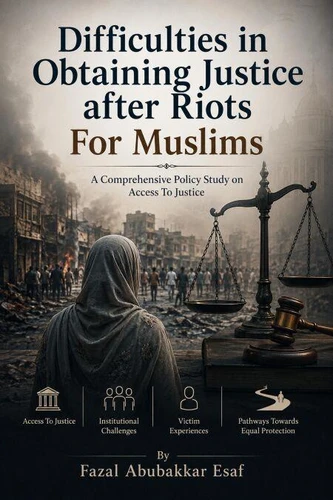
Violence during riots creates immediate humanitarian crises, but the pursuit of justice after riots presents a different and often prolonged challenge. Victims may face difficulties in reporting crimes, accessing legal support, preserving evidence, receiving compensation, and rebuilding their lives. This white paper studies the post-riot justice journey through multiple dimensions: Legal access and procedural challenges Police investigation and accountability mechanisms Challenges faced by witnesses and survivors Compensation and rehabilitation processes Community displacement and economic impact Trust deficit between citizens and institutions Role of civil society and legal aid organizations Policy reforms for improving justice delivery The paper argues that effective post-riot justice requires systems that are transparent, independent, accessible, and sensitive to the experiences of survivors.
Violence during riots creates immediate humanitarian crises, but the pursuit of justice after riots presents a different and often prolonged challenge. Victims may face difficulties in reporting crimes, accessing legal support, preserving evidence, receiving compensation, and rebuilding their lives. This white paper studies the post-riot justice journey through multiple dimensions: Legal access and procedural challenges Police investigation and accountability mechanisms Challenges faced by witnesses and survivors Compensation and rehabilitation processes Community displacement and economic impact Trust deficit between citizens and institutions Role of civil society and legal aid organizations Policy reforms for improving justice delivery The paper argues that effective post-riot justice requires systems that are transparent, independent, accessible, and sensitive to the experiences of survivors.


 , qui est-ce ?