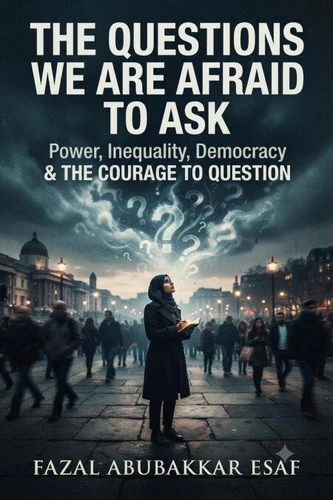
Every society has questions it avoids. Some questions are uncomfortable because they challenge power. Some are painful because they reveal inequalities we have learned to ignore. Some are difficult because they force us to look beyond our own experiences and recognize the struggles of people whose lives are different from ours. Who owns a country?Is it only those with wealth, influence, and authority? Or does ownership belong equally to every citizen who contributes to its existence?What happens when people stop questioning?Does silence create peace, or does it allow injustice to grow unnoticed?Can democracy survive without dissent?Can a nation remain free if citizens are afraid to disagree?These questions are not meant to divide society.
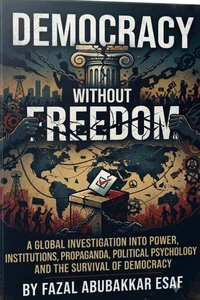
They are meant to understand it. A democracy is not measured only by elections, speeches, and institutions. It is measured by how it treats its weakest citizens, how it responds to criticism, how it protects diversity, and whether ordinary people feel that their voices matter. This book explores the relationship between power and people. It looks at caste, inequality, political influence, social divisions, identity, and the everyday struggles that often remain invisible.
The purpose of this work is not to provide simple answers to complicated problems. Societies are too complex for easy solutions. The purpose is to ask better questions. Because every meaningful change begins with someone willing to ask:Why is this happening?Who benefits from this system?Who is being forgotten?What can we do differently?A society that fears questions eventually fears truth. A society that welcomes questions creates the possibility of justice.
Every society has questions it avoids. Some questions are uncomfortable because they challenge power. Some are painful because they reveal inequalities we have learned to ignore. Some are difficult because they force us to look beyond our own experiences and recognize the struggles of people whose lives are different from ours. Who owns a country?Is it only those with wealth, influence, and authority? Or does ownership belong equally to every citizen who contributes to its existence?What happens when people stop questioning?Does silence create peace, or does it allow injustice to grow unnoticed?Can democracy survive without dissent?Can a nation remain free if citizens are afraid to disagree?These questions are not meant to divide society.
They are meant to understand it. A democracy is not measured only by elections, speeches, and institutions. It is measured by how it treats its weakest citizens, how it responds to criticism, how it protects diversity, and whether ordinary people feel that their voices matter. This book explores the relationship between power and people. It looks at caste, inequality, political influence, social divisions, identity, and the everyday struggles that often remain invisible.
The purpose of this work is not to provide simple answers to complicated problems. Societies are too complex for easy solutions. The purpose is to ask better questions. Because every meaningful change begins with someone willing to ask:Why is this happening?Who benefits from this system?Who is being forgotten?What can we do differently?A society that fears questions eventually fears truth. A society that welcomes questions creates the possibility of justice.


 , qui est-ce ?