Throughout history, power has always created two realities. The reality shown to the world. And the reality hidden behind closed doors. Kings spoke about loyalty while fearing betrayal. Leaders promised unity while preparing political battles. Allies shook hands while secretly planning against each other. Empires appeared strong from outside while weaknesses grew within. The story of power is not only the story of victories.
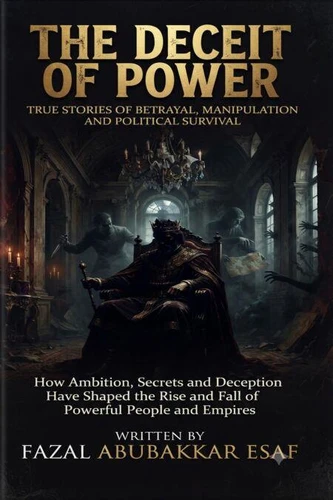
It is also the story of deception. THE DECEIT OF POWER explores thirty-five historical cases where ambition, manipulation, betrayal, and political calculation changed the course of nations. From ancient kingdoms to modern governments, these stories reveal a recurring pattern: people often lose power not only because of external enemies, but because of decisions made inside their own circles. The book follows a central question:How does deception create political power-and why does it so often destroy the people who use it?Each chapter investigates a different moment in history by examining the people involved, their ambitions, their strategies, their hidden motives, and the consequences of their choices.
This is not merely a collection of scandals. It is an investigation into the human psychology of power. Behind every throne was a person. Behind every decision was a desire. Behind every betrayal was a calculation. Behind every collapse was a warning sign. The purpose of this book is not to simplify history into heroes and villains. Human events are rarely that simple. Powerful individuals often operated within complicated circumstances, facing pressures, fears, ambitions, and limitations.
The greatest lesson of history is not that powerful people always win. It is that power built on deception often creates the conditions for its own destruction.
Throughout history, power has always created two realities. The reality shown to the world. And the reality hidden behind closed doors. Kings spoke about loyalty while fearing betrayal. Leaders promised unity while preparing political battles. Allies shook hands while secretly planning against each other. Empires appeared strong from outside while weaknesses grew within. The story of power is not only the story of victories.
It is also the story of deception. THE DECEIT OF POWER explores thirty-five historical cases where ambition, manipulation, betrayal, and political calculation changed the course of nations. From ancient kingdoms to modern governments, these stories reveal a recurring pattern: people often lose power not only because of external enemies, but because of decisions made inside their own circles. The book follows a central question:How does deception create political power-and why does it so often destroy the people who use it?Each chapter investigates a different moment in history by examining the people involved, their ambitions, their strategies, their hidden motives, and the consequences of their choices.
This is not merely a collection of scandals. It is an investigation into the human psychology of power. Behind every throne was a person. Behind every decision was a desire. Behind every betrayal was a calculation. Behind every collapse was a warning sign. The purpose of this book is not to simplify history into heroes and villains. Human events are rarely that simple. Powerful individuals often operated within complicated circumstances, facing pressures, fears, ambitions, and limitations.
The greatest lesson of history is not that powerful people always win. It is that power built on deception often creates the conditions for its own destruction.


 , qui est-ce ?