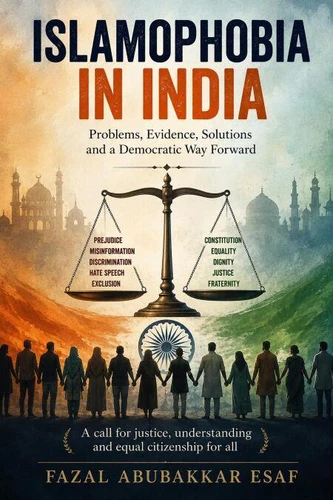
"The opposite of prejudice is not agreement. It is the willingness to see another human being as fully human." India is one of the world's most diverse societies, where multiple religions, languages, cultures, traditions, and histories exist together. This diversity has always been both a remarkable strength and a continuing democratic challenge. The question of Islamophobia - fear, prejudice, hostility, or discrimination directed toward Muslims because they are Muslim - requires careful examination.
It is a subject surrounded by strong emotions, political disagreements, historical memories, and competing narratives. A meaningful discussion requires moving beyond slogans and examining evidence, lived experiences, institutions, media practices, social attitudes, and constitutional principles. This book does not attempt to simplify a complex issue into a single explanation. Societies do not develop prejudice overnight.
Fear can emerge through historical trauma, misinformation, political incentives, social separation, economic inequality, media framing, and repeated stereotypes. At the same time, solutions cannot come only through criticism; they require practical reforms, responsible citizenship, stronger institutions, and honest dialogue. The purpose of this work is to explore the problem while also focusing on possibilities for improvement.
It examines how communities become stereotyped, how discrimination appears in daily life, how technology influences public opinion, how institutions respond, and what citizens, media organizations, schools, and governments can do to strengthen democratic equality. A mature democracy must protect two principles at the same time: freedom of expression and protection from discrimination. People must have the right to debate ideas, policies, and beliefs, but no person should lose dignity, safety, or equal citizenship because of their religious identity.
The future of India depends not on eliminating differences, but on learning how to live with differences while preserving equality before the law.
"The opposite of prejudice is not agreement. It is the willingness to see another human being as fully human." India is one of the world's most diverse societies, where multiple religions, languages, cultures, traditions, and histories exist together. This diversity has always been both a remarkable strength and a continuing democratic challenge. The question of Islamophobia - fear, prejudice, hostility, or discrimination directed toward Muslims because they are Muslim - requires careful examination.
It is a subject surrounded by strong emotions, political disagreements, historical memories, and competing narratives. A meaningful discussion requires moving beyond slogans and examining evidence, lived experiences, institutions, media practices, social attitudes, and constitutional principles. This book does not attempt to simplify a complex issue into a single explanation. Societies do not develop prejudice overnight.
Fear can emerge through historical trauma, misinformation, political incentives, social separation, economic inequality, media framing, and repeated stereotypes. At the same time, solutions cannot come only through criticism; they require practical reforms, responsible citizenship, stronger institutions, and honest dialogue. The purpose of this work is to explore the problem while also focusing on possibilities for improvement.
It examines how communities become stereotyped, how discrimination appears in daily life, how technology influences public opinion, how institutions respond, and what citizens, media organizations, schools, and governments can do to strengthen democratic equality. A mature democracy must protect two principles at the same time: freedom of expression and protection from discrimination. People must have the right to debate ideas, policies, and beliefs, but no person should lose dignity, safety, or equal citizenship because of their religious identity.
The future of India depends not on eliminating differences, but on learning how to live with differences while preserving equality before the law.

 , qui est-ce ?