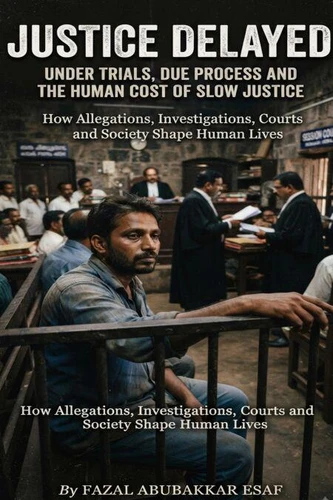
Justice is one of the most important promises made by a democratic society. Every citizen expects that when a crime occurs, the guilty will be identified and held accountable. At the same time, every citizen also expects that the innocent will be protected from wrongful punishment. The strength of a justice system is not measured only by how effectively it punishes criminals, but also by how carefully it protects human dignity, fairness and due process.
Between accusation and judgment lies a difficult journey. For many people, that journey can last months or even years. During this period, an accused person may experience imprisonment, social judgment, financial hardship, emotional suffering and damage to personal reputation. Families may struggle without income. Children may experience uncertainty. Careers may be interrupted. Relationships may break under pressure.
At the same time, victims and their families may also experience pain when justice is delayed. This book explores that complex reality. Justice Delayed is not written to defend crime or ignore the suffering of victims. Nor is it written to weaken the importance of law enforcement and public security. A democratic society requires both justice and security. The central question of this book is:How can a society fight crime while ensuring that innocent people are not destroyed by the process of seeking justice?
Justice is one of the most important promises made by a democratic society. Every citizen expects that when a crime occurs, the guilty will be identified and held accountable. At the same time, every citizen also expects that the innocent will be protected from wrongful punishment. The strength of a justice system is not measured only by how effectively it punishes criminals, but also by how carefully it protects human dignity, fairness and due process.
Between accusation and judgment lies a difficult journey. For many people, that journey can last months or even years. During this period, an accused person may experience imprisonment, social judgment, financial hardship, emotional suffering and damage to personal reputation. Families may struggle without income. Children may experience uncertainty. Careers may be interrupted. Relationships may break under pressure.
At the same time, victims and their families may also experience pain when justice is delayed. This book explores that complex reality. Justice Delayed is not written to defend crime or ignore the suffering of victims. Nor is it written to weaken the importance of law enforcement and public security. A democratic society requires both justice and security. The central question of this book is:How can a society fight crime while ensuring that innocent people are not destroyed by the process of seeking justice?


 , qui est-ce ?