On a cold December morning in 1903, on a bare sandbar off the coast of North Carolina, two brothers from Ohio who ran a bicycle shop and had never finished high school put a fragile machine of spruce and muslin into the air under its own power, steered it, and brought it down again - and then did it three more times before lunch. It was witnessed by five men. It was barely reported. And it changed the world more completely, and more quickly, than almost any single event in the history of technology.
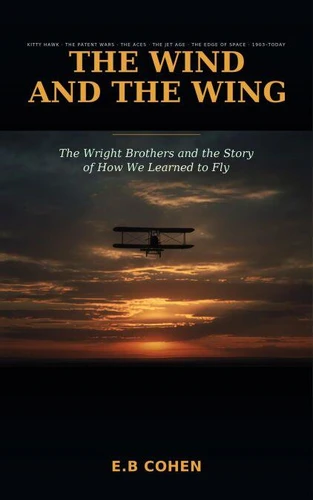
In The Wind and the Wing, E. B Cohen tells the whole astonishing story - not only of Wilbur and Orville Wright, but of the entire human conquest of the air. Beginning with the oldest dream, from Icarus to Leonardo to the first balloonists, the book follows the gliding pioneers who died proving flight was possible, the twelve seconds at Kitty Hawk that answered a question four thousand years old, and the bitter patent war that consumed the brothers in the years after their triumph.
And then it follows the machine they made as it escaped them and remade the twentieth century: the aces of the Great War, Lindbergh's long night over the Atlantic, the terrible efficiency of the bomber, the jet that shrank the planet, the Concorde's rise and fall, and the drones and stealth aircraft of our own strange sky. Along the way, Cohen explains the machinery itself - how a wing lifts, why control was a deeper problem than power, why a propeller is really a spinning wing, what happens at the speed of sound - from first principles, with an everyday clarity that assumes no prior knowledge, while telling a human story on every page.
Even-handed, gripping, and genuinely explanatory, this is the one complete account of how humanity learned to fly, and of the two brothers who, in twelve seconds on a beach, opened the sky for us all.
On a cold December morning in 1903, on a bare sandbar off the coast of North Carolina, two brothers from Ohio who ran a bicycle shop and had never finished high school put a fragile machine of spruce and muslin into the air under its own power, steered it, and brought it down again - and then did it three more times before lunch. It was witnessed by five men. It was barely reported. And it changed the world more completely, and more quickly, than almost any single event in the history of technology.
In The Wind and the Wing, E. B Cohen tells the whole astonishing story - not only of Wilbur and Orville Wright, but of the entire human conquest of the air. Beginning with the oldest dream, from Icarus to Leonardo to the first balloonists, the book follows the gliding pioneers who died proving flight was possible, the twelve seconds at Kitty Hawk that answered a question four thousand years old, and the bitter patent war that consumed the brothers in the years after their triumph.
And then it follows the machine they made as it escaped them and remade the twentieth century: the aces of the Great War, Lindbergh's long night over the Atlantic, the terrible efficiency of the bomber, the jet that shrank the planet, the Concorde's rise and fall, and the drones and stealth aircraft of our own strange sky. Along the way, Cohen explains the machinery itself - how a wing lifts, why control was a deeper problem than power, why a propeller is really a spinning wing, what happens at the speed of sound - from first principles, with an everyday clarity that assumes no prior knowledge, while telling a human story on every page.
Even-handed, gripping, and genuinely explanatory, this is the one complete account of how humanity learned to fly, and of the two brothers who, in twelve seconds on a beach, opened the sky for us all.


 , qui est-ce ?