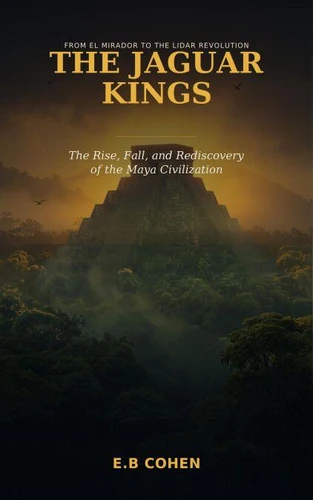
For three thousand years the Maya built kingdoms in a rainforest that should have made kingdoms impossible. They raised pyramids higher than anything in the Americas before the skyscraper, invented the only complete writing system of the ancient New World, tracked Venus to within a day across centuries, and counted time in millions of years - and then, in the ninth century, their greatest cities went silent, one by one, and the forest closed over them.
Here is the whole story, told from the stones themselves: Aguada Fénix and the oldest monument; El Mirador, the first superpower; the divine kings of Tikal and the Snake Kingdom's wars; Pakal's tomb and the warrior queen of Naranjo; the glyphs, the calendar, and the four books that survived a friar's fire; the milpa farmers, chocolate money, and the ballgame played for mortal stakes; the great collapse and every suspect in it; Chichen Itza and the last kingdom that fell in 1697 - twenty years after Newton's calculus; and the rediscovery: Stephens and Catherwood hacking through vines, a Soviet linguist breaking the code from Leningrad, and lasers revealing sixty thousand hidden ruins beneath the canopy.
The Maya never vanished. Seven million of their descendants still speak their languages today. This is the history of the civilization the world keeps finding - and what it teaches about how civilizations end, and how they refuse to.
For three thousand years the Maya built kingdoms in a rainforest that should have made kingdoms impossible. They raised pyramids higher than anything in the Americas before the skyscraper, invented the only complete writing system of the ancient New World, tracked Venus to within a day across centuries, and counted time in millions of years - and then, in the ninth century, their greatest cities went silent, one by one, and the forest closed over them.
Here is the whole story, told from the stones themselves: Aguada Fénix and the oldest monument; El Mirador, the first superpower; the divine kings of Tikal and the Snake Kingdom's wars; Pakal's tomb and the warrior queen of Naranjo; the glyphs, the calendar, and the four books that survived a friar's fire; the milpa farmers, chocolate money, and the ballgame played for mortal stakes; the great collapse and every suspect in it; Chichen Itza and the last kingdom that fell in 1697 - twenty years after Newton's calculus; and the rediscovery: Stephens and Catherwood hacking through vines, a Soviet linguist breaking the code from Leningrad, and lasers revealing sixty thousand hidden ruins beneath the canopy.
The Maya never vanished. Seven million of their descendants still speak their languages today. This is the history of the civilization the world keeps finding - and what it teaches about how civilizations end, and how they refuse to.

 , qui est-ce ?