Gary Patterson, a diligent yet overlooked middle manager, dies in 1999 while fixing a faulty coffee machine at Aethelred Industries, his warnings about asbestos and safety hazards long ignored. He becomes a ghost, communicating through sticky-notes and eventually a LaserJet 5000 printer. Decades later, intern Maya discovers his hidden warnings and uncovers the corporation's cover-up. With colleagues Kevin, Chloe, and Marcus, she exposes the truth, leading to the CEO's downfall and the building's preservation as a museum dedicated to workplace accountability.
The narrative spans over a century, following Gary's ghost, his found family of forgotten office equipment ghosts (Doris, Reginald, Bob), and generations of caretakers who expand the museum into a global network of accountability archives. The story explores themes of institutional memory, the cost of being ignored, and the patient work required to make truth endure. Key subplots include Diane's unsent letter, the museum's near-demolition, a coordinated legal attack by corporations, and the fire that nearly destroys the printer.
The book culminates in the museum's centennial, affirming that Gary's legacy-the method of persistent, honest truth-telling-has outlasted him. It's a meditation on legacy, showing that real change requires constant vigilance and that even a ghost's voice can build an institution.
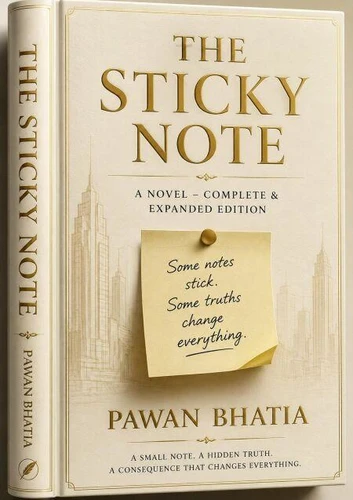
Gary Patterson, a diligent yet overlooked middle manager, dies in 1999 while fixing a faulty coffee machine at Aethelred Industries, his warnings about asbestos and safety hazards long ignored. He becomes a ghost, communicating through sticky-notes and eventually a LaserJet 5000 printer. Decades later, intern Maya discovers his hidden warnings and uncovers the corporation's cover-up. With colleagues Kevin, Chloe, and Marcus, she exposes the truth, leading to the CEO's downfall and the building's preservation as a museum dedicated to workplace accountability.
The narrative spans over a century, following Gary's ghost, his found family of forgotten office equipment ghosts (Doris, Reginald, Bob), and generations of caretakers who expand the museum into a global network of accountability archives. The story explores themes of institutional memory, the cost of being ignored, and the patient work required to make truth endure. Key subplots include Diane's unsent letter, the museum's near-demolition, a coordinated legal attack by corporations, and the fire that nearly destroys the printer.
The book culminates in the museum's centennial, affirming that Gary's legacy-the method of persistent, honest truth-telling-has outlasted him. It's a meditation on legacy, showing that real change requires constant vigilance and that even a ghost's voice can build an institution.


 , qui est-ce ?