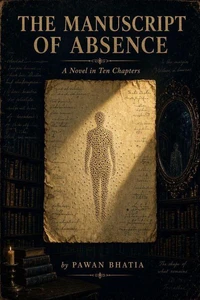
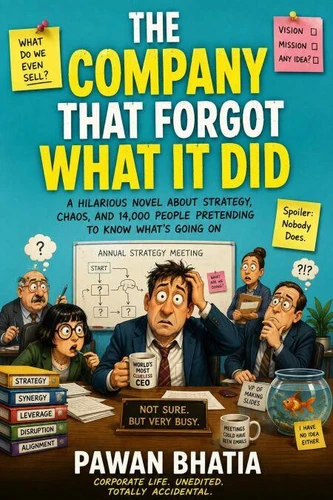
Anya, a senior analyst at Aethelred Industries, asks the forbidden question at a corporate summit: "What do we actually do?" This earns her a promotion to "Head of Strategic Clarity, " tasked with uncovering the company's true purpose. Her investigation reveals a shocking truth: for 27 years, Aethelred has sold nothing. It generates revenue through 47 mysterious streams, a £400 million "black budget, " and endless jargon-but has no actual product.
The company runs entirely on belief, stories, and collective delusion. Anya interviews executives who all admit they don't know what the company makes. The CFO tracks revenue without sources. The CTO creates innovation roadmaps without innovations. Marketing sells feelings, not products. HR manages protocols for nothing. Only Derek, a 22-year veteran, remembers when Aethelred made envelopes. In the basement, Anya discovers the company's origin: it started as an envelope manufacturer in 1987.
She finds Gerald Aethelred's journal, confessing he lost his company to "aspirational" rebranding. She also finds a prototype-the Aethelred Premium Envelope, shelved in 2012 for being "too small."Anya launches the envelope. It becomes a phenomenon, saving the company. But success brings new crises: financial strain, overwhelming demand, employee burnout. Anya realizes the company's true purpose isn't selling products-it's filling the void with meaning.
She steps down as CEO, opens a small envelope shop, and finds peace in making real things. The novel explores corporate absurdity, the emptiness of modern work, and the power of asking honest questions. Anya's journey shows that meaning isn't found in titles or revenue-it's found in creating something real, honest, and good.
Anya, a senior analyst at Aethelred Industries, asks the forbidden question at a corporate summit: "What do we actually do?" This earns her a promotion to "Head of Strategic Clarity, " tasked with uncovering the company's true purpose. Her investigation reveals a shocking truth: for 27 years, Aethelred has sold nothing. It generates revenue through 47 mysterious streams, a £400 million "black budget, " and endless jargon-but has no actual product.
The company runs entirely on belief, stories, and collective delusion. Anya interviews executives who all admit they don't know what the company makes. The CFO tracks revenue without sources. The CTO creates innovation roadmaps without innovations. Marketing sells feelings, not products. HR manages protocols for nothing. Only Derek, a 22-year veteran, remembers when Aethelred made envelopes. In the basement, Anya discovers the company's origin: it started as an envelope manufacturer in 1987.
She finds Gerald Aethelred's journal, confessing he lost his company to "aspirational" rebranding. She also finds a prototype-the Aethelred Premium Envelope, shelved in 2012 for being "too small."Anya launches the envelope. It becomes a phenomenon, saving the company. But success brings new crises: financial strain, overwhelming demand, employee burnout. Anya realizes the company's true purpose isn't selling products-it's filling the void with meaning.
She steps down as CEO, opens a small envelope shop, and finds peace in making real things. The novel explores corporate absurdity, the emptiness of modern work, and the power of asking honest questions. Anya's journey shows that meaning isn't found in titles or revenue-it's found in creating something real, honest, and good.


 , qui est-ce ?