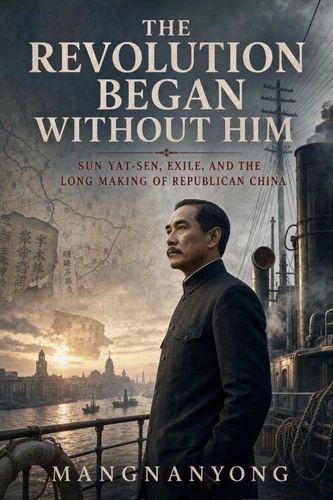
Sun Yat-sen was not in China when the revolution that ended the Qing dynasty began. By then he had spent years moving through Hawaii, Japan, Southeast Asia, Europe, and North America-raising money, building organizations, surviving failed uprisings, and turning exile into a political method. This narrative follows the doctor who became a wanted revolutionary, the captive whose detention in London made him internationally famous, and the provisional president who surrendered his office to Yuan Shikai.
It traces the costs hidden beneath heroic memory: fractured alliances, disputed funds, authoritarian demands for loyalty, and a republic repeatedly claimed by men with armies. The Revolution Began Without Him neither crowns Sun Yat-sen as the lone father of modern China nor dismisses him as a serial failure. It asks how a man who did not command the decisive uprising left behind the organizations, language, and unfinished design that both the Kuomintang and the Chinese Communist Party would later claim.
Sun Yat-sen was not in China when the revolution that ended the Qing dynasty began. By then he had spent years moving through Hawaii, Japan, Southeast Asia, Europe, and North America-raising money, building organizations, surviving failed uprisings, and turning exile into a political method. This narrative follows the doctor who became a wanted revolutionary, the captive whose detention in London made him internationally famous, and the provisional president who surrendered his office to Yuan Shikai.
It traces the costs hidden beneath heroic memory: fractured alliances, disputed funds, authoritarian demands for loyalty, and a republic repeatedly claimed by men with armies. The Revolution Began Without Him neither crowns Sun Yat-sen as the lone father of modern China nor dismisses him as a serial failure. It asks how a man who did not command the decisive uprising left behind the organizations, language, and unfinished design that both the Kuomintang and the Chinese Communist Party would later claim.


 , qui est-ce ?