SOLDES
Jusqu'à -70% sur une sélection d'articles*

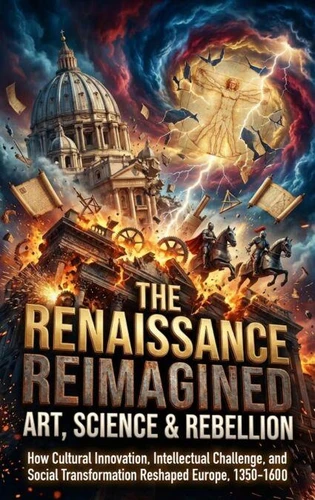
The Renaissance Reimagined: Art, Science & Rebellion. How Cultural Innovation, Intellectual Challenge, and Social Transformation Reshaped Europe, 1350-1600
Par :Formats :
Disponible dans votre compte client Decitre ou Furet du Nord dès validation de votre commande. Le format ePub est :
- Compatible avec une lecture sur My Vivlio (smartphone, tablette, ordinateur)
- Compatible avec une lecture sur liseuses Vivlio
- Pour les liseuses autres que Vivlio, vous devez utiliser le logiciel Adobe Digital Edition. Non compatible avec la lecture sur les liseuses Kindle, Remarkable et Sony
 , qui est-ce ?
Notre partenaire de plateforme de lecture numérique où vous retrouverez l'ensemble de vos ebooks gratuitement
Pour en savoir plus sur nos ebooks, consultez notre aide en ligne ici
C'est si simple ! Lisez votre ebook avec l'app Vivlio sur votre tablette, mobile ou ordinateur :

- Nombre de pages213
- FormatePub
- ISBN978-3-565-24929-9
- EAN9783565249299
- Date de parution15/02/2026
- Protection num.pas de protection
- Taille2 Mo
- Infos supplémentairesepub
- ÉditeurEmphaloz Publishing House
Résumé
The Renaissance was not simply a revival of classical learning but a period of profound cultural disruption that challenged medieval authority, transformed artistic production, and created new forms of knowledge. This comprehensive examination explores how humanism, scientific inquiry, and artistic innovation intersected with political conflict, religious upheaval, and economic change across Italy and northern Europe.
Drawing on artistic treatises, scientific manuscripts, merchant records, and contemporary correspondence, this book reveals how Renaissance culture emerged from specific urban contexts where patronage networks, guild structures, and international trade created opportunities for experimentation.
It explores how artists challenged conventions, how anatomical studies questioned religious doctrine, how printing technology democratized learning, and how philosophical debates undermined scholastic certainties. The narrative examines who participated in Renaissance culture beyond famous names, how women navigated restricted intellectual spaces, how craftsmen and scholars collaborated, and how ideas circulated through courts, universities, and workshops.
It analyzes resistance from established institutions, the relationship between cultural production and political power, and how Renaissance innovations laid foundations for scientific revolution and religious reformation. Without idealizing the period, this work provides rigorous analysis of how cultural movements challenge existing orders.
It explores how artists challenged conventions, how anatomical studies questioned religious doctrine, how printing technology democratized learning, and how philosophical debates undermined scholastic certainties. The narrative examines who participated in Renaissance culture beyond famous names, how women navigated restricted intellectual spaces, how craftsmen and scholars collaborated, and how ideas circulated through courts, universities, and workshops.
It analyzes resistance from established institutions, the relationship between cultural production and political power, and how Renaissance innovations laid foundations for scientific revolution and religious reformation. Without idealizing the period, this work provides rigorous analysis of how cultural movements challenge existing orders.
A propos de Thalia Brookstone




8,99 €