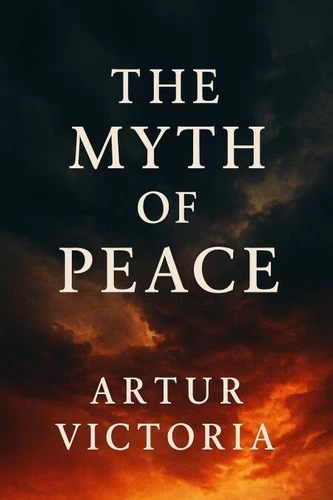
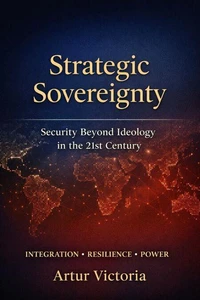
Conflict once had a recognizable form. It marched beneath flags, crossed borders, occupied cities, and left its scars upon the earth. War began with declarations and ended with treaties. Peace was simply the interval between these moments-a period defined by order and the absence of violence. This pattern became so familiar that it solidified into assumption: war was exceptional, peace the natural state.
The twenty-first century has shattered that assumption. Conflict has not disappeared; it has dissolved. It has seeped into the circuitry of globalisation, into data flows, markets, and the architecture of perception. Its movements are ambient rather than explosive, subtle rather than spectacular. We live in a world that speaks the language of peace while operating through continuous strategic competition.
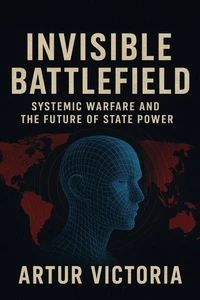
Coercion persists, only quieter and more deeply embedded in everyday systems. This book begins with a stark thesis: peace today is not the opposite of war, but its modern expression. The boundary that once separated war from peace has eroded. Modern infrastructures-digital platforms, supply chains, financial networks, and algorithmic systems-carry strategic pressure without revealing it. The decisive battles of our time occur not on frontlines but in server farms; not through destruction but distortion; not by seizing territory but by shaping perception.
Reality itself has become the contested terrain. This is the gray zone: not a space between war and peace, but the permanent condition of contemporary power. Ambiguity, deniability, and informational manipulation now function as core strategic principles. The book examines the silent arsenal of modern conflict-cyber operations, economic coercion, digital propaganda, and dual-use technologies-and explores how globalisation has transformed every system into potential leverage.
Stability can no longer be equated with the absence of open warfare; it depends on trust, coherence, and resilient institutions. To understand the myth of peace is to see conflict as it truly is: continuous, embedded, and fought through meaning rather than force. The central struggle of our time is not over borders, but over reality-and who defines it.
Conflict once had a recognizable form. It marched beneath flags, crossed borders, occupied cities, and left its scars upon the earth. War began with declarations and ended with treaties. Peace was simply the interval between these moments-a period defined by order and the absence of violence. This pattern became so familiar that it solidified into assumption: war was exceptional, peace the natural state.
The twenty-first century has shattered that assumption. Conflict has not disappeared; it has dissolved. It has seeped into the circuitry of globalisation, into data flows, markets, and the architecture of perception. Its movements are ambient rather than explosive, subtle rather than spectacular. We live in a world that speaks the language of peace while operating through continuous strategic competition.
Coercion persists, only quieter and more deeply embedded in everyday systems. This book begins with a stark thesis: peace today is not the opposite of war, but its modern expression. The boundary that once separated war from peace has eroded. Modern infrastructures-digital platforms, supply chains, financial networks, and algorithmic systems-carry strategic pressure without revealing it. The decisive battles of our time occur not on frontlines but in server farms; not through destruction but distortion; not by seizing territory but by shaping perception.
Reality itself has become the contested terrain. This is the gray zone: not a space between war and peace, but the permanent condition of contemporary power. Ambiguity, deniability, and informational manipulation now function as core strategic principles. The book examines the silent arsenal of modern conflict-cyber operations, economic coercion, digital propaganda, and dual-use technologies-and explores how globalisation has transformed every system into potential leverage.
Stability can no longer be equated with the absence of open warfare; it depends on trust, coherence, and resilient institutions. To understand the myth of peace is to see conflict as it truly is: continuous, embedded, and fought through meaning rather than force. The central struggle of our time is not over borders, but over reality-and who defines it.