SOLDES
Jusqu'à -70% sur une sélection d'articles*

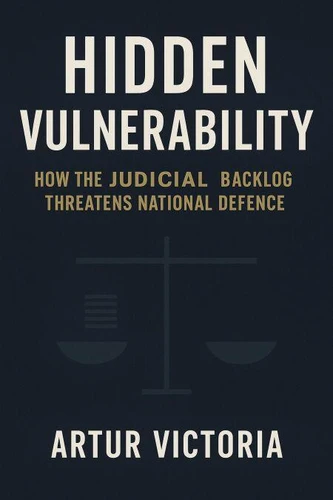
The Hidden Vulnerability - How Judicial Backlog Threatens National Defence. National Defence, #4
Par :Formats :
Disponible dans votre compte client Decitre ou Furet du Nord dès validation de votre commande. Le format ePub protégé est :
- Compatible avec une lecture sur My Vivlio (smartphone, tablette, ordinateur)
- Compatible avec une lecture sur liseuses Vivlio
- Pour les liseuses autres que Vivlio, vous devez utiliser le logiciel Adobe Digital Edition. Non compatible avec la lecture sur les liseuses Kindle, Remarkable et Sony
- Non compatible avec un achat hors France métropolitaine
 , qui est-ce ?
Notre partenaire de plateforme de lecture numérique où vous retrouverez l'ensemble de vos ebooks gratuitement
Pour en savoir plus sur nos ebooks, consultez notre aide en ligne ici
C'est si simple ! Lisez votre ebook avec l'app Vivlio sur votre tablette, mobile ou ordinateur :

- FormatePub
- ISBN8231855131
- EAN9798231855131
- Date de parution05/12/2025
- Protection num.Adobe DRM
- Infos supplémentairesepub
- ÉditeurWalzone Press
Résumé
From a national defence perspective, judicial delays are not merely a social or economic problem; they can also pose a significant national security threat. National security is defined not only by military strength and external defence mechanisms but also by the internal stability of a country. A judicial system that fails to deliver justice in a timely manner is one of the most significant internal threats to national security.
The backlog of cases and delayed judicial processes create openings for extremist movements or other non-state actors to gain a foothold in society. These groups often thrive in environments where the state appears incapable of maintaining social order. The longer it takes for the judiciary to resolve issues of human rights violations, corruption, or economic inequality, the more vulnerable the state becomes to exploitation by domestic or international actors looking to destabilize the system.
The impact of judicial delay is not only logistical but psychological. For many individuals, the experience of waiting for justice, of being ignored or marginalized, can generate a profound sense of powerlessness. This sense of being overlooked by the system fosters frustration and alienation. Moreover, it creates a feedback loop in which dissatisfaction with the judicial system is compounded by a growing perception that the judiciary does not care about ordinary citizens' needs or concerns.
The backlog of cases and delayed judicial processes create openings for extremist movements or other non-state actors to gain a foothold in society. These groups often thrive in environments where the state appears incapable of maintaining social order. The longer it takes for the judiciary to resolve issues of human rights violations, corruption, or economic inequality, the more vulnerable the state becomes to exploitation by domestic or international actors looking to destabilize the system.
The impact of judicial delay is not only logistical but psychological. For many individuals, the experience of waiting for justice, of being ignored or marginalized, can generate a profound sense of powerlessness. This sense of being overlooked by the system fosters frustration and alienation. Moreover, it creates a feedback loop in which dissatisfaction with the judicial system is compounded by a growing perception that the judiciary does not care about ordinary citizens' needs or concerns.
A propos de Artur Victoria


2,99 €

3,49 €

2,49 €

2,99 €

2,99 €

2,99 €



3,49 €

3,49 €

3,49 €



5,49 €

6,49 €

6,49 €
