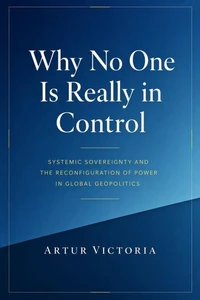
This book examines state reform through the combined lenses of political philosophy, institutional design, and applied public policy. It argues that effective governance in the 21st century requires more than administrative efficiency: it requires an ethical foundation rooted in transparency, accountability, human rights, and institutional legitimacy. The central thesis advanced throughout the work is that transparency constitutes a modern dimension of sovereignty, strengthening national resilience, public trust, and institutional credibility.
The structure of the book follows a deliberate progression. It begins with theoretical foundations drawn from classical and contemporary political thought, establishing the ethical principles that should guide public authority. It then moves to operational frameworks, translating normative values into measurable governance indicators, oversight mechanisms, and accountability structures. This methodological transition enables the reader to understand how ethical governance can be assessed empirically rather than treated as abstract aspiration.
Finally, the book applies these frameworks to national governance contexts, demonstrating how transparency, anti-corruption measures, regulatory capacity, and civic participation shape institutional performance, economic stability, and national security. Reform is presented as a phased and cumulative process requiring sustained political commitment, institutional coherence, and civic engagement. Overall, the work positions ethical governance not as an idealistic ambition but as a practical architecture necessary for democratic legitimacy, institutional effectiveness, and long-term state sovereignty.
This book examines state reform through the combined lenses of political philosophy, institutional design, and applied public policy. It argues that effective governance in the 21st century requires more than administrative efficiency: it requires an ethical foundation rooted in transparency, accountability, human rights, and institutional legitimacy. The central thesis advanced throughout the work is that transparency constitutes a modern dimension of sovereignty, strengthening national resilience, public trust, and institutional credibility.
The structure of the book follows a deliberate progression. It begins with theoretical foundations drawn from classical and contemporary political thought, establishing the ethical principles that should guide public authority. It then moves to operational frameworks, translating normative values into measurable governance indicators, oversight mechanisms, and accountability structures. This methodological transition enables the reader to understand how ethical governance can be assessed empirically rather than treated as abstract aspiration.
Finally, the book applies these frameworks to national governance contexts, demonstrating how transparency, anti-corruption measures, regulatory capacity, and civic participation shape institutional performance, economic stability, and national security. Reform is presented as a phased and cumulative process requiring sustained political commitment, institutional coherence, and civic engagement. Overall, the work positions ethical governance not as an idealistic ambition but as a practical architecture necessary for democratic legitimacy, institutional effectiveness, and long-term state sovereignty.