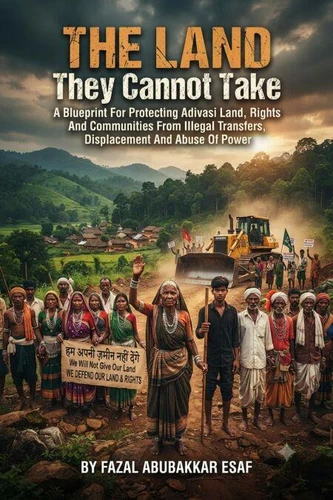
Land has always been more than property. For millions of people, especially indigenous and tribal communities, land represents a living connection between the past, present and future. It carries memories of ancestors, cultural traditions, livelihoods, spiritual relationships and community identity. Yet across the world, land has also become a place where vulnerable communities face complicated challenges - unclear records, administrative delays, displacement pressures, inadequate rehabilitation, legal complexities and unequal access to justice.
The central question of this book is:How can communities protect their land rights in a system where law, administration, technology, economics and political power intersect? The Land They Cannot Take does not approach land disputes through assumptions or accusations. Instead, it follows a research-based principle:Begin with evidence. What happened to the land?What do the records show?Which procedures were followed?Who made decisions?Who benefited?What legal protections exist?What independent mechanisms can verify the truth?
Land has always been more than property. For millions of people, especially indigenous and tribal communities, land represents a living connection between the past, present and future. It carries memories of ancestors, cultural traditions, livelihoods, spiritual relationships and community identity. Yet across the world, land has also become a place where vulnerable communities face complicated challenges - unclear records, administrative delays, displacement pressures, inadequate rehabilitation, legal complexities and unequal access to justice.
The central question of this book is:How can communities protect their land rights in a system where law, administration, technology, economics and political power intersect? The Land They Cannot Take does not approach land disputes through assumptions or accusations. Instead, it follows a research-based principle:Begin with evidence. What happened to the land?What do the records show?Which procedures were followed?Who made decisions?Who benefited?What legal protections exist?What independent mechanisms can verify the truth?

 , qui est-ce ?