SOLDES
Jusqu'à -70% sur une sélection d'articles*

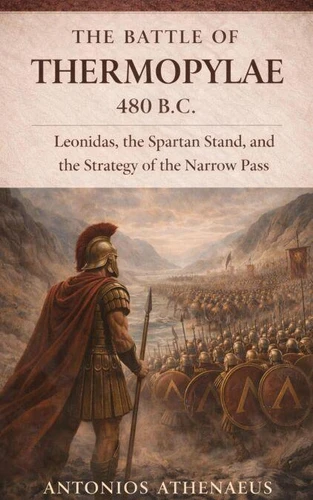
The Battle of Thermopylae 480 B.C.: Leonidas, the Spartan Stand, and the Strategy of the Narrow Pass. Epic Battles of Ancient History, #7
Par :Formats :
Disponible dans votre compte client Decitre ou Furet du Nord dès validation de votre commande. Le format ePub est :
- Compatible avec une lecture sur My Vivlio (smartphone, tablette, ordinateur)
- Compatible avec une lecture sur liseuses Vivlio
- Pour les liseuses autres que Vivlio, vous devez utiliser le logiciel Adobe Digital Edition. Non compatible avec la lecture sur les liseuses Kindle, Remarkable et Sony
 , qui est-ce ?
Notre partenaire de plateforme de lecture numérique où vous retrouverez l'ensemble de vos ebooks gratuitement
Pour en savoir plus sur nos ebooks, consultez notre aide en ligne ici
C'est si simple ! Lisez votre ebook avec l'app Vivlio sur votre tablette, mobile ou ordinateur :

- FormatePub
- ISBN8233678639
- EAN9798233678639
- Date de parution18/03/2026
- Protection num.pas de protection
- Infos supplémentairesepub
- ÉditeurLinda Balsamo
Résumé
At Thermopylae, time-not terrain-was the decisive weapon. In 480 B. C., the Persian Empire advanced into Greece with overwhelming force. Xerxes commanded an army drawn from across Asia, supported by a massive fleet and sustained by imperial logistics. Northern Greece had already collapsed. The road to the heart of the Greek world lay open. Only one position stood in its path. A narrow pass. This book presents the Battle of Thermopylae not as a story of heroic sacrifice, but as a deliberate strategic delay operation.
It examines how a small, disciplined force was positioned to disrupt, contain, and buy time against an advancing empire. At the center stands Leonidas I - not merely as a symbol of defiance, but as a commander executing a mission under strict operational constraints. His selection of terrain, control of the pass, and integration of allied contingents reveal a structured defensive concept rather than a last stand of desperation.
The Greek force exploited critical advantages:. Extreme restriction of battlefield frontage. Neutralization of Persian numerical superiority. Cohesion of heavily armed infantry in confined space. Repeated rotation of engaged units to maintain combat effectivenessThe Persian army, built for scale and maneuver, was forced into fragmentation. Waves of assaults failed to break the defensive line. Even elite formations could not generate decisive effect within the narrow corridor.
Thermopylae demonstrates a fundamental principle of warfare: when terrain is controlled and frontage is constrained, mass loses its advantage. The turning point came not through force, but through exposure. The discovery of the mountain path transformed the operational situation, forcing Leonidas to transition from delay to final stand. What followed was not collapse, but the completion of a mission.
Drawing on Herodotus and modern military analysis, this study reconstructs the engagement in detail, examining:. The strategic situation of the Persian invasion. The selection and preparation of the Thermopylae position. Command structure within the Greek coalition. The phases of Persian assault and Greek defense. The role of terrain in shaping combat outcome. The operational impact of the delay on the wider campaignThis book is written for readers of military history, strategy, and operational art who seek disciplined analysis beyond legend.
Thermopylae was not a defeat. It was the moment when resistance was organized-and time was bought for victory elsewhere.
It examines how a small, disciplined force was positioned to disrupt, contain, and buy time against an advancing empire. At the center stands Leonidas I - not merely as a symbol of defiance, but as a commander executing a mission under strict operational constraints. His selection of terrain, control of the pass, and integration of allied contingents reveal a structured defensive concept rather than a last stand of desperation.
The Greek force exploited critical advantages:. Extreme restriction of battlefield frontage. Neutralization of Persian numerical superiority. Cohesion of heavily armed infantry in confined space. Repeated rotation of engaged units to maintain combat effectivenessThe Persian army, built for scale and maneuver, was forced into fragmentation. Waves of assaults failed to break the defensive line. Even elite formations could not generate decisive effect within the narrow corridor.
Thermopylae demonstrates a fundamental principle of warfare: when terrain is controlled and frontage is constrained, mass loses its advantage. The turning point came not through force, but through exposure. The discovery of the mountain path transformed the operational situation, forcing Leonidas to transition from delay to final stand. What followed was not collapse, but the completion of a mission.
Drawing on Herodotus and modern military analysis, this study reconstructs the engagement in detail, examining:. The strategic situation of the Persian invasion. The selection and preparation of the Thermopylae position. Command structure within the Greek coalition. The phases of Persian assault and Greek defense. The role of terrain in shaping combat outcome. The operational impact of the delay on the wider campaignThis book is written for readers of military history, strategy, and operational art who seek disciplined analysis beyond legend.
Thermopylae was not a defeat. It was the moment when resistance was organized-and time was bought for victory elsewhere.