SOLDES
Jusqu'à -70% sur une sélection d'articles*

Nouveauté
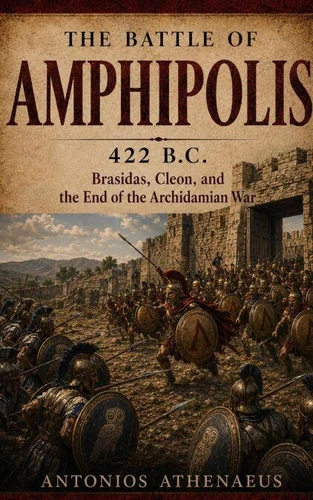
The Battle of Amphipolis 422 B.C.: Brasidas, Cleon, and the End of the Archidamian War. Epic Battles of Ancient History, #23
Par :Formats :
Disponible dans votre compte client Decitre ou Furet du Nord dès validation de votre commande. Le format ePub est :
- Compatible avec une lecture sur My Vivlio (smartphone, tablette, ordinateur)
- Compatible avec une lecture sur liseuses Vivlio
- Pour les liseuses autres que Vivlio, vous devez utiliser le logiciel Adobe Digital Edition. Non compatible avec la lecture sur les liseuses Kindle, Remarkable et Sony
 , qui est-ce ?
Notre partenaire de plateforme de lecture numérique où vous retrouverez l'ensemble de vos ebooks gratuitement
Pour en savoir plus sur nos ebooks, consultez notre aide en ligne ici
C'est si simple ! Lisez votre ebook avec l'app Vivlio sur votre tablette, mobile ou ordinateur :

- FormatePub
- ISBN8235809222
- EAN9798235809222
- Date de parution15/06/2026
- Protection num.pas de protection
- Infos supplémentairesepub
- ÉditeurIoakim Ioakim
Résumé
At Amphipolis, the course of the Peloponnesian War was transformed. In 422 B. C., Athens launched a determined effort to recover its lost position in Thrace and reclaim the strategic city of Amphipolis. The campaign brought together two of the most influential and controversial leaders of the age: the Spartan commander Brasidas and the Athenian statesman-general Cleon. Their confrontation would produce one of the most dramatic and consequential battles of the Peloponnesian War.
This book examines the Battle of Amphipolis not merely as a clash for a distant frontier city, but as a decisive turning point in the struggle between Athens and Sparta. It explores the strategic importance of Thrace, the campaigns that preceded the battle, and the political calculations that drove both sides toward a final confrontation outside the walls of Amphipolis. At the center stands the contest between two very different commanders.
Brasidas combined audacity, speed, and strategic vision, building Spartan influence in northern Greece through diplomacy as much as military force. Cleon arrived determined to reverse Athenian setbacks and restore control over one of Athens' most valuable overseas possessions. Their decisions, assumptions, and leadership styles shaped every stage of the campaign. The battle itself demonstrates a timeless military principle: victory often belongs to the commander who best exploits a fleeting moment of vulnerability.
As the Athenians maneuvered outside Amphipolis, Brasidas recognized an opportunity and struck before his opponent could establish a secure position. What followed was a sudden and decisive engagement in which initiative, timing, and battlefield cohesion proved more important than numerical strength alone. Amphipolis reveals the critical relationship between intelligence, maneuver, leadership, and operational tempo.
The battle showed how hesitation at the decisive moment can prove fatal, while bold action under favorable conditions can transform a local advantage into strategic success. It also illustrates how the loss of key leaders can reshape the political direction of an entire war. Drawing on the account of Thucydides and supported by modern scholarship, this study reconstructs the campaign and battle with clarity and discipline.
The volume includes:. Full political and strategic background of the Peloponnesian War in Thrace. The rise of Brasidas and the Spartan northern campaign. Order of battle and force composition. Step-by-step reconstruction of the Battle of Amphipolis. Tactical maps, battlefield diagrams, and terrain analysis. Chronological timeline of the campaign. Examination of the leadership of Brasidas and Cleon.
Operational and strategic lessons relevant to modern military thoughtWritten for readers of military history, strategy, and classical warfare, this volume moves beyond the traditional narrative to examine how leadership, initiative, operational judgment, and battlefield opportunity shaped one of the defining engagements of the Peloponnesian War. Amphipolis was not simply a Spartan victory. It was the battle that secured Spartan influence in Thrace, destroyed Athens' hopes of recovering the city, and removed both Brasidas and Cleon from the stage of history-helping pave the way toward the Peace of Nicias and a temporary end to the Archidamian War.
This book examines the Battle of Amphipolis not merely as a clash for a distant frontier city, but as a decisive turning point in the struggle between Athens and Sparta. It explores the strategic importance of Thrace, the campaigns that preceded the battle, and the political calculations that drove both sides toward a final confrontation outside the walls of Amphipolis. At the center stands the contest between two very different commanders.
Brasidas combined audacity, speed, and strategic vision, building Spartan influence in northern Greece through diplomacy as much as military force. Cleon arrived determined to reverse Athenian setbacks and restore control over one of Athens' most valuable overseas possessions. Their decisions, assumptions, and leadership styles shaped every stage of the campaign. The battle itself demonstrates a timeless military principle: victory often belongs to the commander who best exploits a fleeting moment of vulnerability.
As the Athenians maneuvered outside Amphipolis, Brasidas recognized an opportunity and struck before his opponent could establish a secure position. What followed was a sudden and decisive engagement in which initiative, timing, and battlefield cohesion proved more important than numerical strength alone. Amphipolis reveals the critical relationship between intelligence, maneuver, leadership, and operational tempo.
The battle showed how hesitation at the decisive moment can prove fatal, while bold action under favorable conditions can transform a local advantage into strategic success. It also illustrates how the loss of key leaders can reshape the political direction of an entire war. Drawing on the account of Thucydides and supported by modern scholarship, this study reconstructs the campaign and battle with clarity and discipline.
The volume includes:. Full political and strategic background of the Peloponnesian War in Thrace. The rise of Brasidas and the Spartan northern campaign. Order of battle and force composition. Step-by-step reconstruction of the Battle of Amphipolis. Tactical maps, battlefield diagrams, and terrain analysis. Chronological timeline of the campaign. Examination of the leadership of Brasidas and Cleon.
Operational and strategic lessons relevant to modern military thoughtWritten for readers of military history, strategy, and classical warfare, this volume moves beyond the traditional narrative to examine how leadership, initiative, operational judgment, and battlefield opportunity shaped one of the defining engagements of the Peloponnesian War. Amphipolis was not simply a Spartan victory. It was the battle that secured Spartan influence in Thrace, destroyed Athens' hopes of recovering the city, and removed both Brasidas and Cleon from the stage of history-helping pave the way toward the Peace of Nicias and a temporary end to the Archidamian War.