SOLDES
Jusqu'à -70% sur une sélection d'articles*

Nouveauté
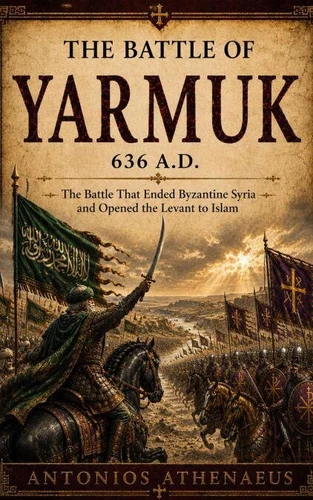
The Battle of Yarmuk 636 A.D.: The Battle That Ended Byzantine Syria and Opened the Levant to Islam. Epic Battles of Eastern Roman Empire, #2
Par :Formats :
Disponible dans votre compte client Decitre ou Furet du Nord dès validation de votre commande. Le format ePub est :
- Compatible avec une lecture sur My Vivlio (smartphone, tablette, ordinateur)
- Compatible avec une lecture sur liseuses Vivlio
- Pour les liseuses autres que Vivlio, vous devez utiliser le logiciel Adobe Digital Edition. Non compatible avec la lecture sur les liseuses Kindle, Remarkable et Sony
 , qui est-ce ?
Notre partenaire de plateforme de lecture numérique où vous retrouverez l'ensemble de vos ebooks gratuitement
Pour en savoir plus sur nos ebooks, consultez notre aide en ligne ici
C'est si simple ! Lisez votre ebook avec l'app Vivlio sur votre tablette, mobile ou ordinateur :

- FormatePub
- ISBN8235533455
- EAN9798235533455
- Date de parution08/06/2026
- Protection num.pas de protection
- Infos supplémentairesepub
- ÉditeurIoakim Ioakim
Résumé
At Yarmuk, the fate of the Eastern Roman Empire in the Levant was decided. In 636 A. D., two worlds collided on the windswept plains near the Yarmuk River. The Eastern Roman Empire, exhausted but victorious after decades of war against Sasanian Persia, sought to reclaim full control of Syria and halt the rapid expansion of the Rashidun Caliphate. Facing them stood the armies of Islam under Khalid ibn al-Walid, determined to preserve their conquests and secure the future of a rising power.
This book examines the Battle of Yarmuk not merely as the decisive engagement of the Muslim conquest of Syria, but as one of the most significant military turning points in world history. It explores the strategic circumstances that brought the Byzantine and Rashidun armies together, the leadership of Emperor Heraclius and Khalid ibn al-Walid, and the operational decisions that shaped the outcome of the campaign.
At the center stands the struggle between the military traditions of Late Antiquity and a new force that was transforming the political landscape of the Near East. The Byzantine army entered the campaign with superior numbers, experienced commanders, and the resources of an empire. Yet battlefield success depended not on size alone, but on cohesion, mobility, and the ability to adapt under pressure.
As the battle unfolded over six days, Khalid skillfully employed his cavalry reserves, preserved the integrity of his line, and seized the initiative at the decisive moment. Yarmuk demonstrates a timeless military principle: armies often collapse not when they suffer the greatest losses, but when command cohesion and operational control begin to fail. The battle revealed the importance of leadership, battlefield flexibility, and concentration of force, while exposing the vulnerabilities of even the most powerful military institutions when confronted by a determined and adaptive opponent.
Drawing on ancient and medieval sources including al-Tabari, al-Baladhuri, Theophanes, and other contemporary traditions, this study reconstructs the battle with clarity and discipline. The volume includes:. Full political and strategic background of the Byzantine-Arab War. Order of battle and force composition. Step-by-step battlefield reconstruction. Tactical diagrams and operational analysis. Chronological timeline of the campaign.
Examination of Khalid ibn al-Walid's battlefield leadership. Operational and strategic lessons relevant to modern military thoughtWritten for readers of military history, strategy, and Late Antique warfare, this volume moves beyond legend and religious tradition to examine how leadership, maneuver, terrain, and command effectiveness shaped one of history's decisive battles. Yarmuk was not simply another victory.
It was the battle that ended Byzantine Syria and opened the Near East to a new era.
This book examines the Battle of Yarmuk not merely as the decisive engagement of the Muslim conquest of Syria, but as one of the most significant military turning points in world history. It explores the strategic circumstances that brought the Byzantine and Rashidun armies together, the leadership of Emperor Heraclius and Khalid ibn al-Walid, and the operational decisions that shaped the outcome of the campaign.
At the center stands the struggle between the military traditions of Late Antiquity and a new force that was transforming the political landscape of the Near East. The Byzantine army entered the campaign with superior numbers, experienced commanders, and the resources of an empire. Yet battlefield success depended not on size alone, but on cohesion, mobility, and the ability to adapt under pressure.
As the battle unfolded over six days, Khalid skillfully employed his cavalry reserves, preserved the integrity of his line, and seized the initiative at the decisive moment. Yarmuk demonstrates a timeless military principle: armies often collapse not when they suffer the greatest losses, but when command cohesion and operational control begin to fail. The battle revealed the importance of leadership, battlefield flexibility, and concentration of force, while exposing the vulnerabilities of even the most powerful military institutions when confronted by a determined and adaptive opponent.
Drawing on ancient and medieval sources including al-Tabari, al-Baladhuri, Theophanes, and other contemporary traditions, this study reconstructs the battle with clarity and discipline. The volume includes:. Full political and strategic background of the Byzantine-Arab War. Order of battle and force composition. Step-by-step battlefield reconstruction. Tactical diagrams and operational analysis. Chronological timeline of the campaign.
Examination of Khalid ibn al-Walid's battlefield leadership. Operational and strategic lessons relevant to modern military thoughtWritten for readers of military history, strategy, and Late Antique warfare, this volume moves beyond legend and religious tradition to examine how leadership, maneuver, terrain, and command effectiveness shaped one of history's decisive battles. Yarmuk was not simply another victory.
It was the battle that ended Byzantine Syria and opened the Near East to a new era.