SOLDES
Jusqu'à -70% sur une sélection d'articles*

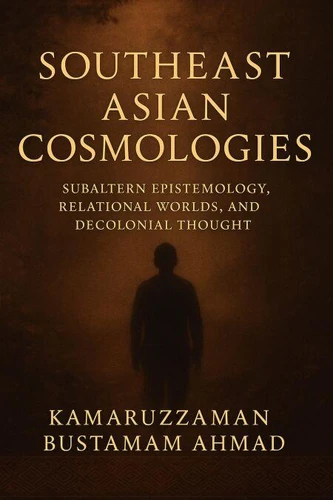
Southeast Asian Cosmologies: Subaltern Epistemology, Relational Worlds, and Decolonial Thought. Southeast Asian Studies
Par :Formats :
Disponible dans votre compte client Decitre ou Furet du Nord dès validation de votre commande. Le format ePub est :
- Compatible avec une lecture sur My Vivlio (smartphone, tablette, ordinateur)
- Compatible avec une lecture sur liseuses Vivlio
- Pour les liseuses autres que Vivlio, vous devez utiliser le logiciel Adobe Digital Edition. Non compatible avec la lecture sur les liseuses Kindle, Remarkable et Sony
 , qui est-ce ?
Notre partenaire de plateforme de lecture numérique où vous retrouverez l'ensemble de vos ebooks gratuitement
Pour en savoir plus sur nos ebooks, consultez notre aide en ligne ici
C'est si simple ! Lisez votre ebook avec l'app Vivlio sur votre tablette, mobile ou ordinateur :

- FormatePub
- ISBN8232353322
- EAN9798232353322
- Date de parution28/11/2025
- Protection num.pas de protection
- Infos supplémentairesepub
- ÉditeurDraft2Digital
Résumé
Southeast Asia has been studied, mapped, and interpreted-yet rarely on its own conceptual terms. This book departs from that long-standing pattern. It begins with a critical recognition: that the intellectual life of Southeast Asia cannot be fully understood through borrowed frameworks. Theory, in this work, does not come from elsewhere. It emerges from within-through ritual, cosmology, storytelling, relational ethics, and everyday presence.
This is not a survey of cultures or a commentary on traditions. It is a philosophical reconstruction. It offers a region-centered epistemology-built on the internal grammar of Southeast Asian thought systems. From ancestral logic to contemporary subaltern voices, the book charts a path from critique to conceptual sovereignty. Rather than treating Southeast Asia as an object of study, the work recognizes it as a ground of thought.
Through careful analysis and sustained reflection, the chapters trace how knowledge has been extracted, silenced, or distorted-while also showing how it can be reclaimed. The book moves across anthropology, philosophy, postcolonial studies, and religious thought without losing its grounding in the lived experiences of the region. It speaks to the need for an intellectual framework that does not merely include Southeast Asia, but begins from it.
For readers seeking a deeper understanding of Southeast Asia-not as spectacle, but as source-this book offers the tools to think otherwise.
This is not a survey of cultures or a commentary on traditions. It is a philosophical reconstruction. It offers a region-centered epistemology-built on the internal grammar of Southeast Asian thought systems. From ancestral logic to contemporary subaltern voices, the book charts a path from critique to conceptual sovereignty. Rather than treating Southeast Asia as an object of study, the work recognizes it as a ground of thought.
Through careful analysis and sustained reflection, the chapters trace how knowledge has been extracted, silenced, or distorted-while also showing how it can be reclaimed. The book moves across anthropology, philosophy, postcolonial studies, and religious thought without losing its grounding in the lived experiences of the region. It speaks to the need for an intellectual framework that does not merely include Southeast Asia, but begins from it.
For readers seeking a deeper understanding of Southeast Asia-not as spectacle, but as source-this book offers the tools to think otherwise.