SOLDES
Jusqu'à -70% sur une sélection d'articles*

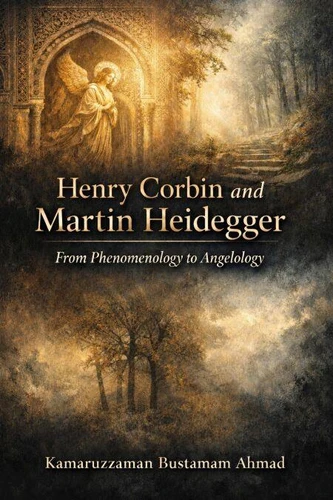
Henry Corbin and Martin Heidegger From Phenomenology to Angelology
Par :Formats :
Disponible dans votre compte client Decitre ou Furet du Nord dès validation de votre commande. Le format ePub est :
- Compatible avec une lecture sur My Vivlio (smartphone, tablette, ordinateur)
- Compatible avec une lecture sur liseuses Vivlio
- Pour les liseuses autres que Vivlio, vous devez utiliser le logiciel Adobe Digital Edition. Non compatible avec la lecture sur les liseuses Kindle, Remarkable et Sony
 , qui est-ce ?
Notre partenaire de plateforme de lecture numérique où vous retrouverez l'ensemble de vos ebooks gratuitement
Pour en savoir plus sur nos ebooks, consultez notre aide en ligne ici
C'est si simple ! Lisez votre ebook avec l'app Vivlio sur votre tablette, mobile ou ordinateur :

- FormatePub
- ISBN8235059368
- EAN9798235059368
- Date de parution18/02/2026
- Protection num.pas de protection
- Infos supplémentairesepub
- ÉditeurIoakim Ioakim
Résumé
What happens to ontology after the end of metaphysics?In Henry Corbin and Martin Heidegger: From Phenomenology to Angelology, Kamaruzzaman Bustamam Ahmad offers a rigorous and original philosophical investigation into one of the most provocative yet rarely examined encounters in twentieth-century thought. Martin Heidegger dismantled onto-theology and redefined the question of Being through the concept of the ontological difference, ecstatic temporality, and finitude.
Henry Corbin, deeply influenced by Heidegger, moved in a daring direction-recovering the imaginal world (mundus imaginalis), angelology, and visionary metaphysics within Islamic philosophy. Are these two thinkers opposed?Or does Corbin extend Heidegger's project beyond finitude?This book argues that the movement from phenomenology to angelology is not a regression into metaphysics, but a serious ontological experiment.
By examining themes such as: Ontological difference The destruction of onto-theology Ecstatic temporality and finitude The imaginal world Angelic mediation Vertical temporality and transcendence the author demonstrates how Corbin's imaginal ontology may preserve Heidegger's post-metaphysical discipline while expanding the grammar of manifestation. This is not a devotional work and not a theological apology.
It is a philosophical study situated at the intersection of continental philosophy, phenomenology, Islamic metaphysics, and philosophy of religion. Ideal for readers of:Heidegger studiesHenry Corbin scholarshipContinental philosophyPost-metaphysical ontologyPhilosophy of religionIslamic philosophyClear, rigorous, and intellectually demanding, this book is designed for scholars, graduate students, and serious readers seeking to understand how ontology might evolve beyond the crisis of metaphysics.
Henry Corbin, deeply influenced by Heidegger, moved in a daring direction-recovering the imaginal world (mundus imaginalis), angelology, and visionary metaphysics within Islamic philosophy. Are these two thinkers opposed?Or does Corbin extend Heidegger's project beyond finitude?This book argues that the movement from phenomenology to angelology is not a regression into metaphysics, but a serious ontological experiment.
By examining themes such as: Ontological difference The destruction of onto-theology Ecstatic temporality and finitude The imaginal world Angelic mediation Vertical temporality and transcendence the author demonstrates how Corbin's imaginal ontology may preserve Heidegger's post-metaphysical discipline while expanding the grammar of manifestation. This is not a devotional work and not a theological apology.
It is a philosophical study situated at the intersection of continental philosophy, phenomenology, Islamic metaphysics, and philosophy of religion. Ideal for readers of:Heidegger studiesHenry Corbin scholarshipContinental philosophyPost-metaphysical ontologyPhilosophy of religionIslamic philosophyClear, rigorous, and intellectually demanding, this book is designed for scholars, graduate students, and serious readers seeking to understand how ontology might evolve beyond the crisis of metaphysics.