SOLDES
Jusqu'à -70% sur une sélection d'articles*

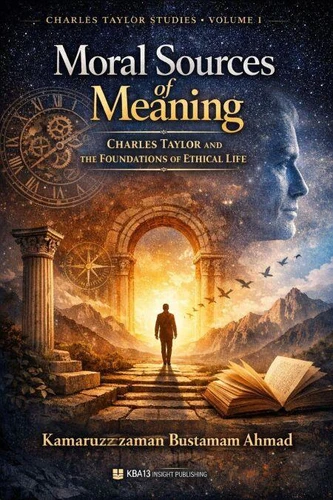
Moral Sources of Meaning: Charles Taylor and the Foundations of Ethical Life. Charles Taylor Studies
Par :Formats :
Disponible dans votre compte client Decitre ou Furet du Nord dès validation de votre commande. Le format ePub est :
- Compatible avec une lecture sur My Vivlio (smartphone, tablette, ordinateur)
- Compatible avec une lecture sur liseuses Vivlio
- Pour les liseuses autres que Vivlio, vous devez utiliser le logiciel Adobe Digital Edition. Non compatible avec la lecture sur les liseuses Kindle, Remarkable et Sony
 , qui est-ce ?
Notre partenaire de plateforme de lecture numérique où vous retrouverez l'ensemble de vos ebooks gratuitement
Pour en savoir plus sur nos ebooks, consultez notre aide en ligne ici
C'est si simple ! Lisez votre ebook avec l'app Vivlio sur votre tablette, mobile ou ordinateur :

- FormatePub
- ISBN8233218378
- EAN9798233218378
- Date de parution04/01/2026
- Protection num.pas de protection
- Infos supplémentairesepub
- ÉditeurLinda Balsamo
Résumé
Moral Sources of Meaning: Charles Taylor and the Foundations of Ethical Life is a profound philosophical inquiry into why modern moral thought feels increasingly thin, procedural, and disconnected from lived human experience. Drawing on the moral philosophy of Charles Taylor, this book argues that ethics cannot begin with rules, duties, or obligations alone. Moral life, it insists, is grounded in meaning, orientation, and deep evaluative commitments that shape identity long before formal reasoning begins.
In an age dominated by procedural ethics, moral neutrality, and outcome-based reasoning, this book reclaims a richer moral landscape-one in which strong evaluation, horizons of significance, and moral sources give depth to human agency. Rather than treating morality as rule-compliance or preference calculation, the book shows how ethical life is lived as an ongoing orientation toward goods that define who we are and what makes a life meaningful.
This work offers a sustained critique of: procedural ethics and moral minimalism emotivism and preference-based moral theories utilitarian reductionism and moral naturalism At the same time, it develops a non-reductive moral ontology, explaining why moral meaning is real without reducing it to empirical facts or subjective preferences. Ethics, in this view, is not a technical system but a structure of moral intelligibility that shapes commitment, responsibility, aspiration, and integrity across an entire life.
Written in a clear yet rigorous style, Moral Sources of Meaning is ideal for readers seeking depth without dogmatism. It speaks to scholars, graduate students, and serious readers interested in moral philosophy, ethical theory, philosophy of the self, and post-procedural ethics. This book is not a manual for moral decision-making. It is a philosophical map-one that helps readers understand why moral life matters, why failure wounds, and why meaning cannot be engineered by rules alone.
In an age dominated by procedural ethics, moral neutrality, and outcome-based reasoning, this book reclaims a richer moral landscape-one in which strong evaluation, horizons of significance, and moral sources give depth to human agency. Rather than treating morality as rule-compliance or preference calculation, the book shows how ethical life is lived as an ongoing orientation toward goods that define who we are and what makes a life meaningful.
This work offers a sustained critique of: procedural ethics and moral minimalism emotivism and preference-based moral theories utilitarian reductionism and moral naturalism At the same time, it develops a non-reductive moral ontology, explaining why moral meaning is real without reducing it to empirical facts or subjective preferences. Ethics, in this view, is not a technical system but a structure of moral intelligibility that shapes commitment, responsibility, aspiration, and integrity across an entire life.
Written in a clear yet rigorous style, Moral Sources of Meaning is ideal for readers seeking depth without dogmatism. It speaks to scholars, graduate students, and serious readers interested in moral philosophy, ethical theory, philosophy of the self, and post-procedural ethics. This book is not a manual for moral decision-making. It is a philosophical map-one that helps readers understand why moral life matters, why failure wounds, and why meaning cannot be engineered by rules alone.