SOLDES
Jusqu'à -70% sur une sélection d'articles*

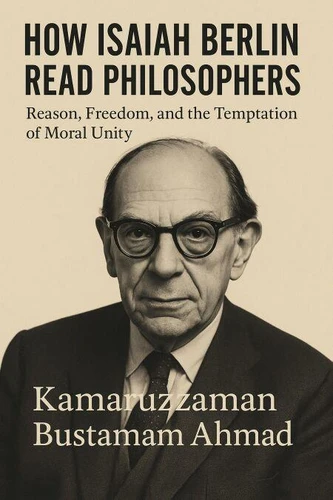
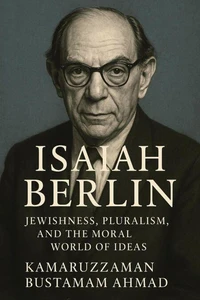
HOW ISAIAH BERLIN READ PHILOSOPHERS: Reason, Freedom, and the Temptation of Moral Unity. Isaiah Berlin Studies
Par :Formats :
Disponible dans votre compte client Decitre ou Furet du Nord dès validation de votre commande. Le format ePub est :
- Compatible avec une lecture sur My Vivlio (smartphone, tablette, ordinateur)
- Compatible avec une lecture sur liseuses Vivlio
- Pour les liseuses autres que Vivlio, vous devez utiliser le logiciel Adobe Digital Edition. Non compatible avec la lecture sur les liseuses Kindle, Remarkable et Sony
 , qui est-ce ?
Notre partenaire de plateforme de lecture numérique où vous retrouverez l'ensemble de vos ebooks gratuitement
Pour en savoir plus sur nos ebooks, consultez notre aide en ligne ici
C'est si simple ! Lisez votre ebook avec l'app Vivlio sur votre tablette, mobile ou ordinateur :

- FormatePub
- ISBN8232846992
- EAN9798232846992
- Date de parution16/12/2025
- Protection num.pas de protection
- Infos supplémentairesepub
- ÉditeurDraft2Digital
Résumé
This book offers a rare and disciplined introduction to Isaiah Berlin's distinctive way of reading philosophers. Rather than presenting Berlin as the author of a closed doctrine, it reveals him as a thinker whose intellectual strength lay in resisting final answers while deepening moral seriousness. Through close engagement with major figures of modern philosophy-Rousseau, Hume, Montesquieu, Kant, and the German Idealists-this book explores how Berlin exposed the moral risks hidden within ambitious theories of reason, unity, and historical necessity.
Each chapter shows how ideas that promise liberation can, when pressed too far, become instruments of coercion and moral simplification. At the centre of the book is Berlin's conviction that human values are plural, objective, and often incompatible. Moral life, therefore, cannot be reduced to harmony without loss. Freedom, as Berlin understood it, is not the achievement of moral perfection, but the capacity to choose responsibly among conflicting goods without surrendering judgement to systems or abstractions.
Written with philosophical clarity and historical sensitivity, this book does not ask readers to adopt Berlin's conclusions uncritically. It invites them to learn from his method: a way of understanding thinkers that preserves tension, acknowledges tragedy, and resists the temptation of moral certainty. This is a book for readers who are dissatisfied with simplified accounts of freedom and morality, and who believe that philosophy remains relevant precisely because it refuses to offer comforting illusions.
It speaks to scholars, students, and serious readers who seek a deeper understanding of how ideas shape human life-and how intellectual humility can be a moral virtue.
Each chapter shows how ideas that promise liberation can, when pressed too far, become instruments of coercion and moral simplification. At the centre of the book is Berlin's conviction that human values are plural, objective, and often incompatible. Moral life, therefore, cannot be reduced to harmony without loss. Freedom, as Berlin understood it, is not the achievement of moral perfection, but the capacity to choose responsibly among conflicting goods without surrendering judgement to systems or abstractions.
Written with philosophical clarity and historical sensitivity, this book does not ask readers to adopt Berlin's conclusions uncritically. It invites them to learn from his method: a way of understanding thinkers that preserves tension, acknowledges tragedy, and resists the temptation of moral certainty. This is a book for readers who are dissatisfied with simplified accounts of freedom and morality, and who believe that philosophy remains relevant precisely because it refuses to offer comforting illusions.
It speaks to scholars, students, and serious readers who seek a deeper understanding of how ideas shape human life-and how intellectual humility can be a moral virtue.