SOLDES
Jusqu'à -70% sur une sélection d'articles*

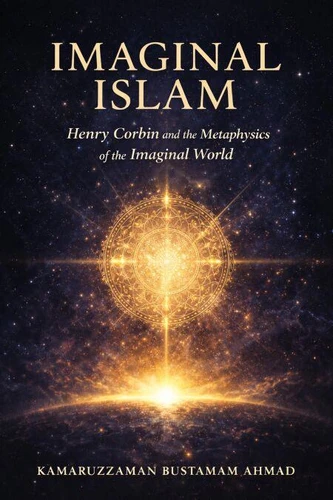
IMAGINAL ISLAM: Henry Corbin and the Metaphysics of the Imaginal World
Par :Formats :
Disponible dans votre compte client Decitre ou Furet du Nord dès validation de votre commande. Le format ePub est :
- Compatible avec une lecture sur My Vivlio (smartphone, tablette, ordinateur)
- Compatible avec une lecture sur liseuses Vivlio
- Pour les liseuses autres que Vivlio, vous devez utiliser le logiciel Adobe Digital Edition. Non compatible avec la lecture sur les liseuses Kindle, Remarkable et Sony
 , qui est-ce ?
Notre partenaire de plateforme de lecture numérique où vous retrouverez l'ensemble de vos ebooks gratuitement
Pour en savoir plus sur nos ebooks, consultez notre aide en ligne ici
C'est si simple ! Lisez votre ebook avec l'app Vivlio sur votre tablette, mobile ou ordinateur :

- FormatePub
- ISBN8232015794
- EAN9798232015794
- Date de parution17/12/2025
- Protection num.pas de protection
- Infos supplémentairesepub
- ÉditeurDraft2Digital
Résumé
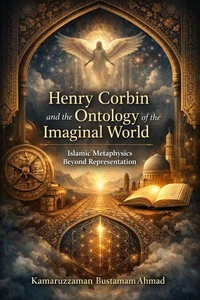
Imaginal Islam: Henry Corbin and the Metaphysics of the Imaginal World is a continuation of my long-term engagement with the thought of Henry Corbin. Building upon my earlier studies of Corbin, this book moves beyond introductory exposition toward a deeper exploration of the imaginal world as a fundamental dimension of Islamic metaphysics. At the heart of this work is Corbin's recovery of ?alam al-mithal-the imaginal world that mediates between the sensible and the intelligible.
Rather than treating imagination as a psychological faculty or literary metaphor, this book approaches it as an ontological reality through which meaning, symbol, and spiritual knowledge become accessible. Drawing on Corbin's readings of Ibn ?Arabi, Suhrawardi, and the Illuminationist tradition, the book examines creative imagination as an organ of knowledge, angelology as a metaphysics of mediation, and symbolic perception as a mode of encounter rather than representation.
These themes are developed not as abstract doctrines, but as a coherent philosophical vision that challenges modern reductions of religion to law, ideology, or identity. This volume also situates imaginal Islam within the contemporary crisis of meaning. By engaging Corbin's critique of modernity, secularism, and literalism, the book offers an alternative orientation-one that neither rejects critical reason nor surrenders metaphysical depth.
Imaginal Islam is presented here as a way of seeing, grounded in Islamic philosophy yet open to universal resonance. Written for readers already familiar with Corbin's work, as well as those seeking a philosophically rigorous entry into his thought, Imaginal Islam is intended as a reflective continuation rather than a repetition. It invites the reader to move from interpretation toward participation, and from conceptual understanding toward attentiveness to the imaginal horizon itself.
Rather than treating imagination as a psychological faculty or literary metaphor, this book approaches it as an ontological reality through which meaning, symbol, and spiritual knowledge become accessible. Drawing on Corbin's readings of Ibn ?Arabi, Suhrawardi, and the Illuminationist tradition, the book examines creative imagination as an organ of knowledge, angelology as a metaphysics of mediation, and symbolic perception as a mode of encounter rather than representation.
These themes are developed not as abstract doctrines, but as a coherent philosophical vision that challenges modern reductions of religion to law, ideology, or identity. This volume also situates imaginal Islam within the contemporary crisis of meaning. By engaging Corbin's critique of modernity, secularism, and literalism, the book offers an alternative orientation-one that neither rejects critical reason nor surrenders metaphysical depth.
Imaginal Islam is presented here as a way of seeing, grounded in Islamic philosophy yet open to universal resonance. Written for readers already familiar with Corbin's work, as well as those seeking a philosophically rigorous entry into his thought, Imaginal Islam is intended as a reflective continuation rather than a repetition. It invites the reader to move from interpretation toward participation, and from conceptual understanding toward attentiveness to the imaginal horizon itself.