Thalia Brookstone is a nonfiction author known for writing reflective books on psychology, personal growth, and emotional balance. Her work blends modern behavioral insights with calm, thoughtful storytelling, encouraging readers to approach life with greater self-awareness, resilience, and clarity.
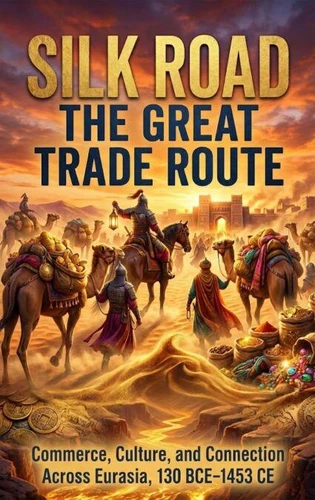
Silk Road: The Great Trade Route. Commerce, Culture, and Connection Across Eurasia, 130 BCE-1453 CE
Par :Formats :
Disponible dans votre compte client Decitre ou Furet du Nord dès validation de votre commande. Le format ePub est :
- Compatible avec une lecture sur My Vivlio (smartphone, tablette, ordinateur)
- Compatible avec une lecture sur liseuses Vivlio
- Pour les liseuses autres que Vivlio, vous devez utiliser le logiciel Adobe Digital Edition. Non compatible avec la lecture sur les liseuses Kindle, Remarkable et Sony
 , qui est-ce ?
Notre partenaire de plateforme de lecture numérique où vous retrouverez l'ensemble de vos ebooks gratuitement
Pour en savoir plus sur nos ebooks, consultez notre aide en ligne ici
C'est si simple ! Lisez votre ebook avec l'app Vivlio sur votre tablette, mobile ou ordinateur :

- Nombre de pages175
- FormatePub
- ISBN978-3-565-25094-3
- EAN9783565250943
- Date de parution16/02/2026
- Protection num.pas de protection
- Taille2 Mo
- Infos supplémentairesepub
- ÉditeurEmphaloz Publishing House
Résumé
For over fifteen centuries, the Silk Road network connected East and West through overland routes traversing deserts, mountain passes, and steppe grasslands. More than a single path, this complex system of trade corridors facilitated exchange of goods, ideas, religions, and technologies that shaped civilizations from China to the Mediterranean. This history examines how commercial networks created unprecedented cultural interaction across Eurasia.
Drawing on archaeological findings, merchant accounts, diplomatic records, and material evidence, the narrative traces the Silk Road's evolution through distinct periods.
Han Dynasty China sought western horses and sought to counter nomadic threats, establishing trade relationships that brought silk westward. Roman demand for luxury textiles created profitable commerce. Sasanian Persia controlled central routes, taxing caravans and mediating exchange. Tang Dynasty China presided over the network's golden age, when goods, pilgrims, and diplomatic missions traveled between Chang'an and distant kingdoms. The book explores practical realities of long-distance trade.
Caravanserais provided rest stops in hostile terrain. Merchants navigated multiple currency systems, languages, and political jurisdictions. Nomadic peoples both threatened and facilitated commerce, demanding tribute while offering protection. Oasis cities like Samarkand and Bukhara became cosmopolitan centers where diverse populations interacted. Maritime routes complemented overland paths, connecting Indian Ocean trade to continental networks.
Han Dynasty China sought western horses and sought to counter nomadic threats, establishing trade relationships that brought silk westward. Roman demand for luxury textiles created profitable commerce. Sasanian Persia controlled central routes, taxing caravans and mediating exchange. Tang Dynasty China presided over the network's golden age, when goods, pilgrims, and diplomatic missions traveled between Chang'an and distant kingdoms. The book explores practical realities of long-distance trade.
Caravanserais provided rest stops in hostile terrain. Merchants navigated multiple currency systems, languages, and political jurisdictions. Nomadic peoples both threatened and facilitated commerce, demanding tribute while offering protection. Oasis cities like Samarkand and Bukhara became cosmopolitan centers where diverse populations interacted. Maritime routes complemented overland paths, connecting Indian Ocean trade to continental networks.